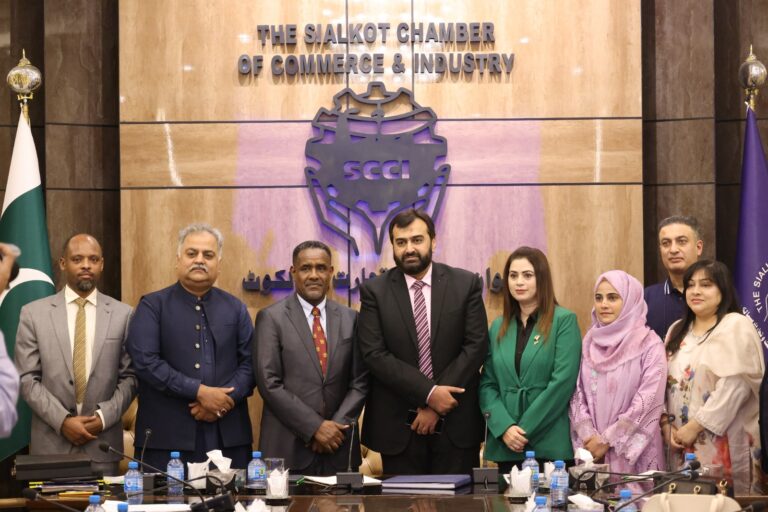
4th Pillar Delegation Visits Institute of Islamic Sciences; Key Discussions Held on Religious and Modern Education, Interfaith Harmony, and International Educational Cooperation.
Institute Islamic — Highlighting the institution's academic performance, he stated that more than 80 percent of students achieve A1 and A grades in...
- Highlighting the institution's academic performance, he stated that more than 80 percent of students achieve A1 and A grades in religious education.
- During the visit, 4thpillar Chairman Farooq Mirza proposed that special initiatives be considered to provide educational opportunities at the institution for children of overseas Pakistani families.
- 4thpillar President Farhat Fatima highlighted the importance of peace, religious tolerance and protection of minority rights.
Led by 4thpillar Chairman Farooq Mirza, the delegation met with the institution’s administration, faculty and students. 4thpillar President Farhat Fatima highlighted the importance of peace, religious tolerance and protection of minority rights.
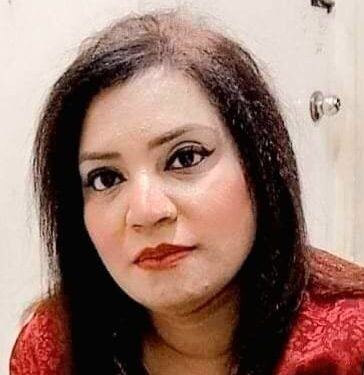
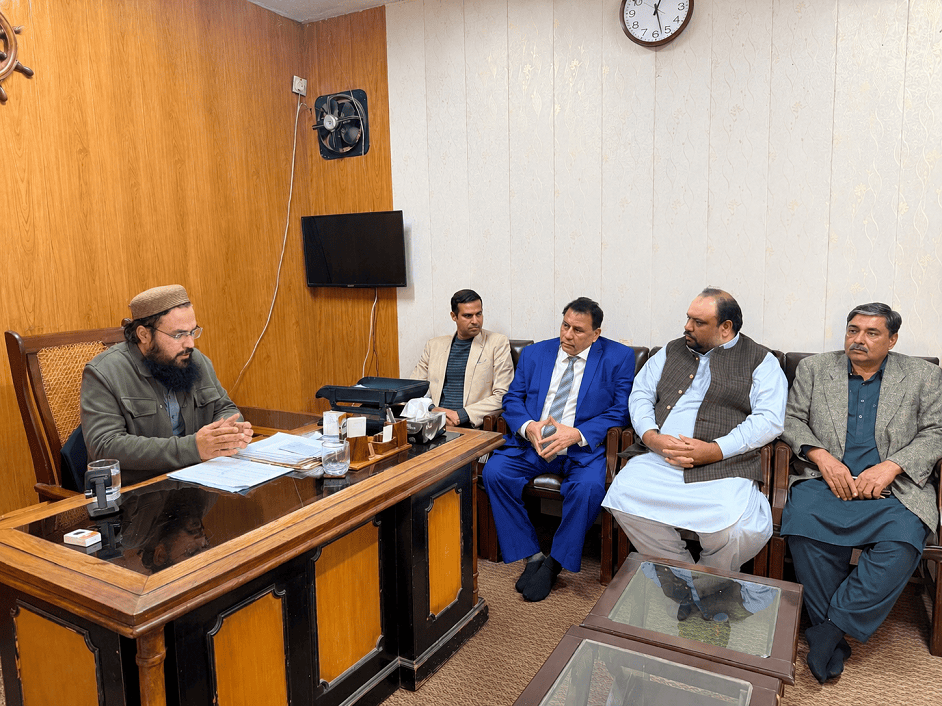
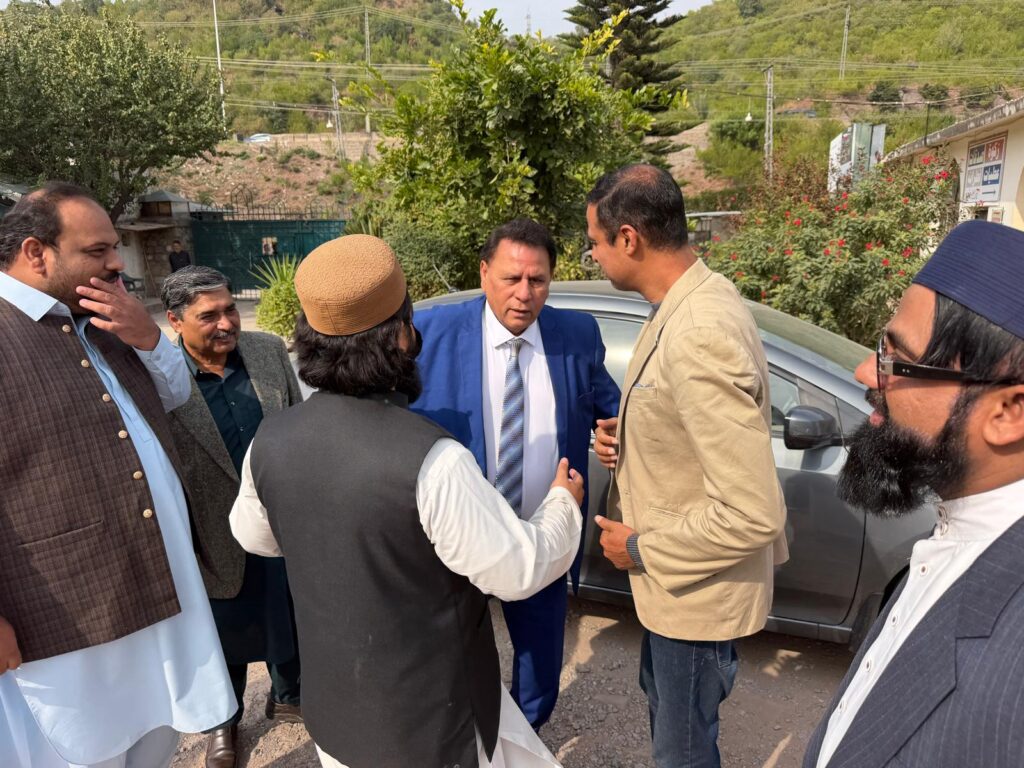
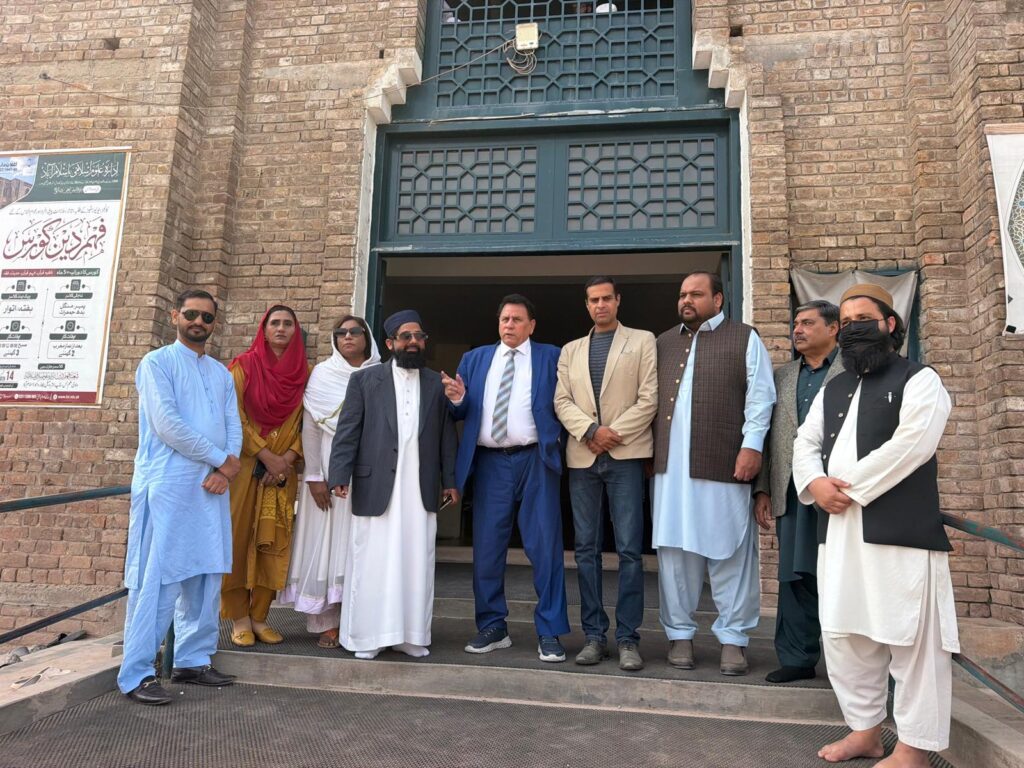
A delegation of 4thpillar, led by its Chairman Farooq Mirza, visited the Institute of Islamic Sciences (Madrasat-ul-Uloom). The delegation included 4thpillar President Farhat Fatima and other members of the organization’s cabinet.
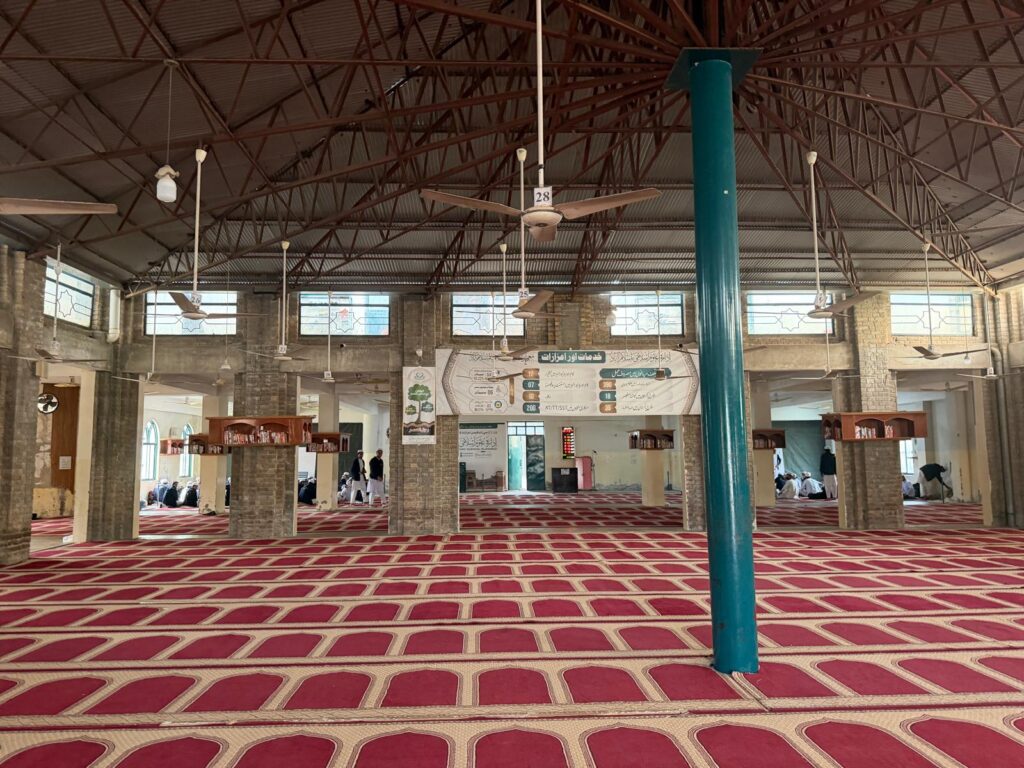
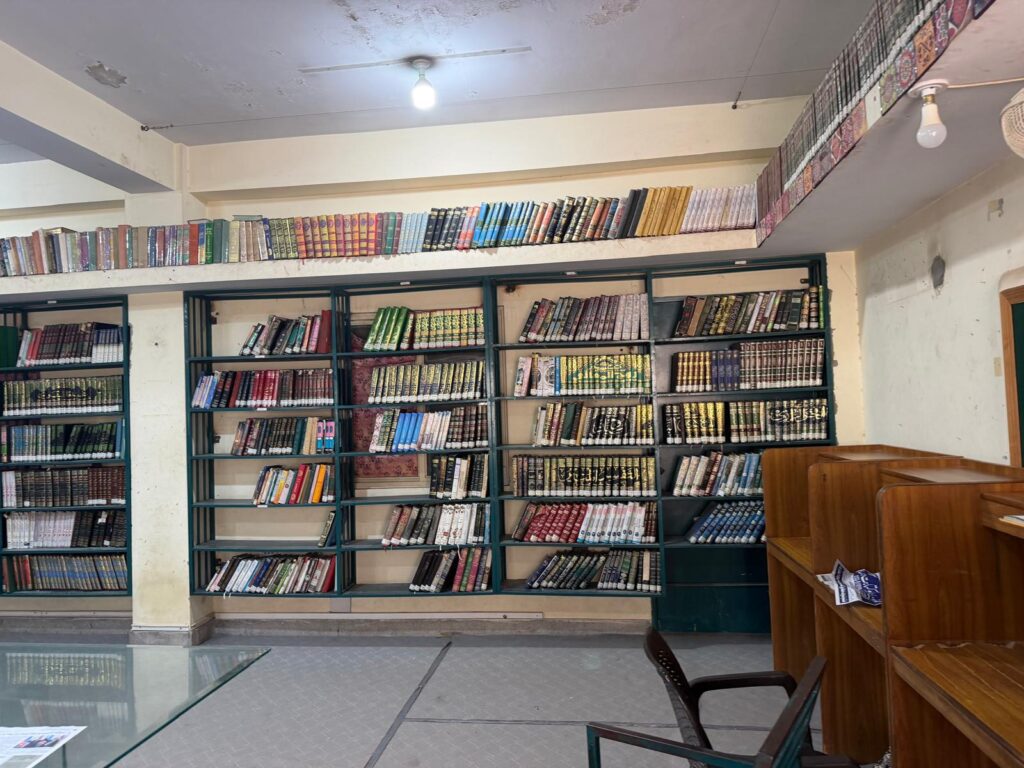
During the visit, the delegation met with the institution’s administration, faculty members and students and held detailed discussions on its educational activities, the integration of religious and modern education, students’ academic achievements, and the institution’s broader social and educational vision.
The delegation was welcomed by Maulana Abdullah Iqbal, Principal and Administrator of the Institute of Islamic Sciences, and Dr. Mufti Abdul Rehman, Chairman of Interfaith Harmony and Overseas Human Rights, Washington, D.C., National Director of The Common Ground in Pakistan, and Chairman of Small Trade Industry.
The institution’s administration briefed the delegation on its founding objectives, educational policies and future plans. Particular emphasis was placed on developing an integrated education system that combines religious studies with contemporary academic disciplines, preparing students to understand modern challenges while remaining firmly grounded in religious values.
4thpillar Chairman Farooq Mirza appreciated the educational and social vision of the Institute of Islamic Sciences, emphasizing that bridging the gap between religious and modern education is an important requirement of the present era.
He stated that knowledge should not be divided into religious and worldly categories but should instead serve as a means of intellectual, moral and practical development.
Referring to the historical development of education in the Indian subcontinent, Farooq Mirza observed that separate systems of religious and modern education gradually emerged, creating intellectual distances between people associated with the two fields.
He said that institutions such as the Institute of Islamic Sciences aim to overcome this divide by providing an educational environment where students can acquire strong foundations in religious studies alongside modern sciences and contemporary academic disciplines.
Farooq Mirza explained that an ideal student should possess three essential qualities. First, a strong faith accompanied by righteous conduct; second, a sound understanding of religious knowledge; and third, proficiency in modern and contemporary education.
He emphasized that individuals equipped with these qualities could contribute effectively to different professional fields while providing ethical and religious guidance within their respective areas of expertise.
Speaking about interfaith harmony, Farooq Mirza said that Islam is not against any religion but stands against oppression and teaches humanity, compassion and respect for all human beings.
He referred to the Quranic principle that all human beings have been granted dignity and honour, emphasizing that people’s rights must be respected regardless of their religion, beliefs, colour or ethnicity.
Referring to shared humanitarian teachings across different religious scriptures, he highlighted the importance of feeding the hungry, providing water to the thirsty, visiting the sick, helping those imprisoned unjustly and supporting people in need.
He said that promoting peace, love and brotherhood requires people to stand up for one another’s rights. The true beauty of Islam, he added, becomes evident when its teachings are reflected in practical life through compassion, justice and respect for all humanity.
Maulana Abdullah Iqbal, Principal and Administrator of the Institute of Islamic Sciences, provided a detailed briefing on the institution’s educational system, curriculum and future plans.
He explained that the institution’s primary objective is to provide students with both religious and contemporary education so that they can develop into balanced, responsible and well-rounded individuals.
He informed the delegation that religious education is being provided under the curriculum of Wifaq-ul-Madaris, while contemporary education is also offered through the Federal Board system.
Highlighting the institution’s academic performance, he stated that more than 80 percent of students achieve A1 and A grades in religious education.
He further shared that students have consistently demonstrated strong performance in Federal Board examinations and have secured five gold medals. Students from the institution are also pursuing BS programmes and higher education in various academic disciplines at colleges and universities.
Maulana Abdullah Iqbal highlighted another important feature of the institution: equal educational opportunities for children from underprivileged families, particularly orphaned students.
He explained that students come from different economic backgrounds, but the institution strives to ensure that every child receives equal opportunities to study, develop and pursue a successful future.
He said that the institution’s mission goes beyond awarding degrees and academic certificates. Its objective is to develop individuals who can bring positive change to society through their knowledge, character and practical abilities.
Dr. Mufti Abdul Rehman, Chairman of Interfaith Harmony and Overseas Human Rights, Washington, D.C., National Director of The Common Ground in Pakistan, and Chairman of Small Trade Industry, shared his views on Islamic teachings, interfaith harmony and human rights.
He stated that Islam does not stand against any religion but teaches resistance against oppression. Humanity, compassion, justice and the protection of others’ rights are fundamental principles of Islamic teachings.
Referring to the shared humanitarian messages found in the holy scriptures of different religions, including the Torah, Psalms, Gospel and the Holy Quran, Dr. Mufti Abdul Rehman emphasized that feeding the hungry, giving water to the thirsty, caring for the sick and helping those in need are common values that can serve as a foundation for mutual understanding and harmony among different faith communities.
He said that Islam teaches kindness and respect towards all human beings and that no individual should be deprived of their rights or dignity because of their religion or beliefs.
Referring to examples from Islamic history, he highlighted the importance Islam places on protecting the rights, dignity and honour of non-Muslim citizens.
Dr. Mufti Abdul Rehman stressed that religious education should not remain limited to acquiring theoretical knowledge. Rather, its teachings must be practised in everyday life to promote peace, love, tolerance and respect for the rights of others.
4thpillar President Farhat Fatima expressed her appreciation for the educational vision of the Institute of Islamic Sciences, particularly its approach towards interfaith harmony and social development.
She said that promoting peace and brotherhood requires ensuring that followers of all religions enjoy their constitutional and fundamental rights.
Farhat Fatima stated that humanity is our primary identity and that religious differences should never become a reason to disregard the dignity and rights of others.
She emphasized that Pakistan’s Constitution provides fundamental rights to all citizens, including the freedom to practise their respective religions.
According to her, interfaith harmony is not merely about bringing people belonging to different religions together. It also means recognizing their rights, respecting their beliefs and ensuring equal opportunities for everyone in society.
She also highlighted the importance of women’s rights and access to modern education for the younger generation.
Farhat Fatima observed that the world is progressing through science and technology, making it essential for young people to have opportunities to acquire knowledge and professional skills across different fields.
She said that combining religious and contemporary education can help build an educated, enlightened and progressive society.
Appreciating the institution’s commitment to education, peace, religious tolerance and human dignity, she said that such initiatives deserve greater recognition and support.
She assured that 4thpillar would work to highlight and promote this positive vision at both national and international levels.
During the visit, 4thpillar Chairman Farooq Mirza proposed that special initiatives be considered to provide educational opportunities at the institution for children of overseas Pakistani families.
He said that Pakistanis living abroad could be interested in sending their children to institutions in Pakistan that offer quality religious and contemporary education under one educational system.
He emphasized the need to introduce the institution’s educational activities to overseas Pakistani communities and communicate its vision and achievements at the international level.
Farooq Mirza also proposed encouraging overseas Pakistanis and philanthropists to support the educational needs of deserving and orphaned students enrolled at the institution.
Such cooperation, he noted, could help provide quality educational opportunities to more children from financially disadvantaged backgrounds.
On the occasion, Farooq Mirza also offered to arrange a special workshop on strategic communication for the institution’s administration.
He emphasized that effective communication is essential for the success of any institution, alongside a strong educational and administrative system.
He said that the educational and social work being carried out at the Institute of Islamic Sciences deserves greater international visibility.
Through specialized training, faculty members, administrators and relevant staff could be introduced to modern communication strategies, enabling them to present the institution’s achievements, educational initiatives and social contributions more effectively.
He expressed his commitment to helping bring the institution’s work to national and international audiences through 4thpillar’s media and communication platform.
At the conclusion of the visit, both sides emphasized the importance of strengthening joint efforts in education, humanitarian services, interfaith harmony, women’s rights and the intellectual and academic development of young people.
The 4thpillar delegation appreciated the efforts of the Institute of Islamic Sciences’ administration, teachers and students, highlighting the importance of bringing the positive educational and social contributions of such institutions to public attention.
The visit concluded with a shared commitment to exploring further cooperation between 4thpillar and the Institute of Islamic Sciences in the fields of media, education, research and social awareness.
The engagement reflected a shared interest in promoting an educational vision based on knowledge, humanity, mutual respect, religious tolerance and peaceful coexistence.
Senior Journalist | President 4thpillar Media
Frequently Asked Questions
What is the latest update on institute islamic?
Highlighting the institution's academic performance, he stated that more than 80 percent of students achieve A1 and A grades in religious education.
What are the key takeaways and impact?
4thpillar Chairman Farooq Mirza appreciated the educational and social vision of the Institute of Islamic Sciences, emphasizing that bridging the gap between religious and modern education is an important requirement of the present era.
New Provinces Movement Gaining Momentum in Pakistan, Mohsin Naqvi Says Public Support Is Growing
ECP Reserves Verdict in Code of Conduct Violation Case Against Federal Minister Attaullah Tarar
ECO Media Facilitation Centre Inaugurated in Islamabad
Khakan Waheed Khawaja Advocates Education, Healthcare Reforms and Economic Empowerment in Interview with Farooq Mirza
EPNEC and 4thpillar Media Watchdog USA Sign Landmark Agreement to Empower Pakistani Media Workers and Strengthen Protection of Journalists’ Rights Worldwide