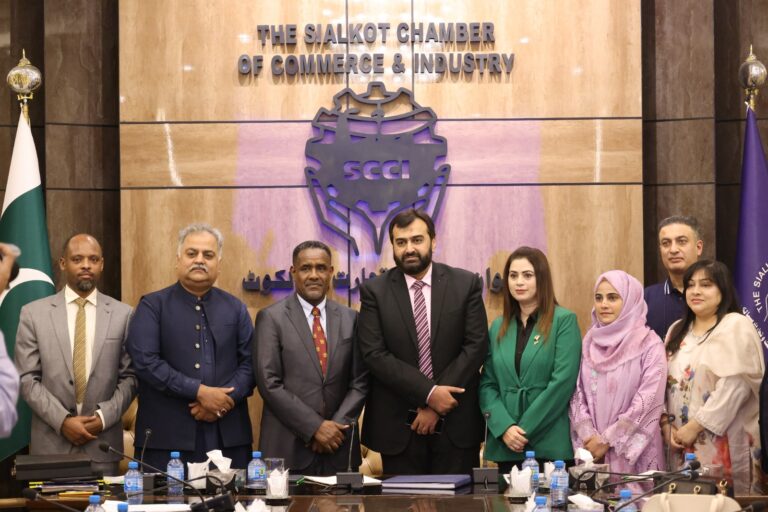
Khakan Waheed Khawaja Advocates Education, Healthcare Reforms and Economic Empowerment in Interview with Farooq Mirza
In an in-depth interview with international journalist Farooq Mirza, Chairman of 4thpillar Media Watchdog, Khakan Waheed Khawaja of Rawal General &...

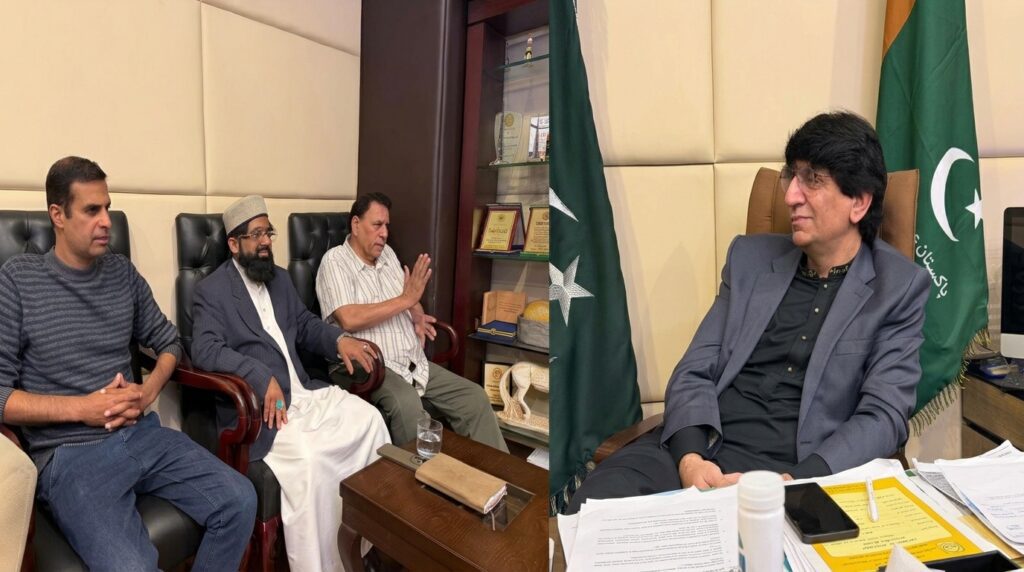
- Looking beyond domestic healthcare, Khawaja discussed plans to introduce health insurance opportunities for overseas Pakistanis.
- Farooq Mirza raised concerns about whether journalists earning around Rs100,000 per month could adequately support their families amid rising living costs.
- Khawaja's central argument was that sustainable national development requires investment in people, particularly through accessible education, affordable healthcare and practical economic opportunities.
ISLAMABAD: In an in-depth interview with international journalist Farooq Mirza, Chairman of 4thpillar Media Watchdog, Khakan Waheed Khawaja of Rawal General & Dental Hospital discussed Pakistan’s challenges in education, healthcare, economic opportunities and the financial independence of ordinary citizens, particularly journalists and young professionals.
During the interview, Khawaja emphasized that Pakistan’s progress depends on investing in human development, improving the education system, expanding access to affordable healthcare and equipping young people with practical skills that can help them compete in the global economy.
One of the key discussions focused on the financial difficulties faced by journalists in Pakistan. Farooq Mirza raised concerns about whether journalists earning around Rs100,000 per month could adequately support their families amid rising living costs.
Khawaja acknowledged the financial pressures facing media professionals and argued that journalism alone should not be the only source of income for those struggling to meet their financial responsibilities.
He explained that initiatives had been launched through the 4thpillar platform to connect Pakistani journalists with business opportunities in the United States and Pakistan.
According to Khawaja, the initiative involves collaboration with business chambers, the Federation of Pakistan Chambers of Commerce and Industry (FPCCI), the Faisalabad Chamber of Commerce and various vendors to identify small-scale business opportunities for journalists.
He also highlighted the development of a digital commerce platform called ShopCare , designed to help individuals establish their own online stores.
Under this initiative, participants are provided with digital storefronts and product recommendations, while also receiving guidance on e-commerce, digital marketing, online banking, advertising and identifying potential customers.
Khawaja claimed that approximately 450 small businesses had been developed through the initiative during the current year.
He stressed that journalists should develop alternative sources of income through legitimate business activities rather than becoming financially dependent on unethical practices or using their professional positions for personal gain.
Khawaja also discussed the importance of digital education for young people, particularly women who have limited opportunities to participate in the traditional workforce.
He said that professional digital training programmes should cover practical subjects such as e-commerce, digital marketing, cybersecurity, online business management and international market access.
He explained that the programme had been designed to remain affordable, with a registration fee of Rs2,000, making it accessible to individuals who cannot afford expensive professional courses.
According to Khawaja, around 150 students were receiving training in Hajira, Azad Jammu and Kashmir, while approximately 50 women had registered for the initiative in the Rawalpindi area.
He said that many educated women, particularly married women, possess valuable skills but lack the training and opportunities required to turn those skills into sustainable sources of income.
Khawaja also invited journalists to encourage their sons and daughters to participate in such programmes, arguing that digital literacy and cybersecurity awareness are increasingly essential for the next generation.
A significant portion of the interview focused on Pakistan’s education system.
Khawaja argued that the country’s educational structure has failed to keep pace with changing global requirements. He questioned why students continue to study outdated curricula while international education systems have evolved to meet modern economic and technological demands.
He maintained that educational reform must begin with improvements in public-sector schools, including better infrastructure, teacher training and the introduction of internationally competitive curricula.
Referring to Article 25-A of Pakistan’s Constitution, he emphasized the state’s responsibility to provide free and compulsory education to children between the ages of five and sixteen.
Khawaja said he had developed a proposed education reform framework focused on strengthening government schools and improving the quality of teaching.
He further argued that education should not be limited to academic qualifications but must prepare students with practical knowledge, professional competencies and the ability to participate in the global economy.
In his view, political leadership should be evaluated on its ability to improve the living standards of ordinary citizens rather than popularity, wealth or public recognition.
Another important subject was the international employment potential of Pakistani nurses.
Khawaja highlighted the importance of foreign-language training, particularly German, in expanding employment opportunities for Pakistani nursing professionals.
He said that German-language training had been introduced for nurses associated with his educational initiatives approximately four years ago.
According to his account, nurses who complete the required German-language proficiency levels, including A1, A2, B1 and B2, can pursue employment opportunities in Germany.
He claimed that some of the trained nurses had received employment opportunities with German hospitals and could earn approximately €1,600 per month, with potential salaries reaching €2,500 to €3,000 depending on the position and qualifications.
He contrasted these figures with the salaries of nurses working in Pakistan, which he described as significantly lower.
Khawaja expressed concern that many nursing institutions focus primarily on collecting fees rather than investing in additional professional training that could improve graduates’ international employment prospects.
He urged educational institutions to introduce foreign-language programmes and develop internationally relevant professional qualifications.
Healthcare reform was another major focus of the discussion.
Khawaja explained a family-based health insurance initiative that he said was developed to help ordinary citizens access medical treatment without facing overwhelming financial pressure.
Under the model he described, a family pays an annual contribution of Rs25,000, through which health insurance coverage of up to Rs500,000 is arranged for a family consisting of the insured individual, spouse and three children.
He said the programme was designed to address the financial difficulties families face when dealing with hospital admissions, childbirth, surgical procedures and other major medical expenses.
According to Khawaja, the initiative initially covered approximately 1,000 families and was subsequently expanded to around 5,000 families.
He explained that the model involves three principal stakeholders: the patient and family receiving healthcare coverage, the insurance company providing financial protection, and the hospital and medical professionals delivering treatment.
He described it as a mutually beneficial arrangement in which patients receive access to treatment, insurance companies manage pooled financial risk, and hospitals and medical professionals are compensated for their services.
Khawaja said the initiative had previously worked with State Life Insurance and was subsequently associated with another insurance provider, Adamjee, as indicated during the interview.
He also disclosed plans to establish his own insurance company in the future.
Looking beyond domestic healthcare, Khawaja discussed plans to introduce health insurance opportunities for overseas Pakistanis.
He said discussions had already taken place with an insurance company regarding a proposed programme for Pakistanis living abroad.
According to him, the plan is to offer family health insurance arrangements that would enable overseas Pakistanis to access medical services in Pakistan.
He indicated that the initiative was expected to move forward around February, subject to the completion of the necessary arrangements.
Khawaja also emphasized the potential of medical tourism to generate foreign exchange for Pakistan.
He argued that attracting overseas patients and Pakistanis living abroad for medical treatment could create additional revenue for hospitals, healthcare professionals and the wider economy.
He maintained that increased foreign exchange earnings could contribute to addressing some of the economic pressures facing the country.
Towards the conclusion of the interview, the discussion returned to the question of leadership and Pakistan’s future.
Khawaja argued that leadership should not be determined by wealth, celebrity status or popularity. Instead, genuine leadership requires the ability to develop policies, implement reforms and improve the lives of ordinary citizens.
He stressed that education and healthcare must remain central priorities in any national development strategy.
He also maintained that meaningful change requires practical implementation rather than political promises.
Responding to Farooq Mirza’s questions, Khawaja presented education, healthcare, digital entrepreneurship and international employment opportunities as interconnected areas that could contribute to Pakistan’s long-term development.
The interview explored issues extending well beyond hospital management and healthcare services. It examined the relationship between economic independence, professional education, digital entrepreneurship and access to medical treatment.
Through the conversation, Farooq Mirza brought attention to the financial challenges confronting Pakistani journalists and ordinary households, while Khakan Waheed Khawaja outlined his proposed initiatives and policy ideas in response.
The discussion highlighted a broader national question: how can Pakistan transform its human resources into an economically independent, professionally skilled and internationally competitive population?
Khawaja’s central argument was that sustainable national development requires investment in people, particularly through accessible education, affordable healthcare and practical economic opportunities.

Frequently Asked Questions
What is the latest update on farooq mirza?
In an in-depth interview with international journalist Farooq Mirza, Chairman of 4thpillar Media Watchdog, Khakan Waheed Khawaja of Rawal General & Dental Hospital discussed Pakistan’s challenges in education, healthcare, economic opportunities and the financial independence of ordinary citizens, particularly journalists and young professionals.
What are the key takeaways and impact?
Responding to Farooq Mirza's questions, Khawaja presented education, healthcare, digital entrepreneurship and international employment opportunities as interconnected areas that could contribute to Pakistan's long-term development.
New Provinces Movement Gaining Momentum in Pakistan, Mohsin Naqvi Says Public Support Is Growing
ECP Reserves Verdict in Code of Conduct Violation Case Against Federal Minister Attaullah Tarar
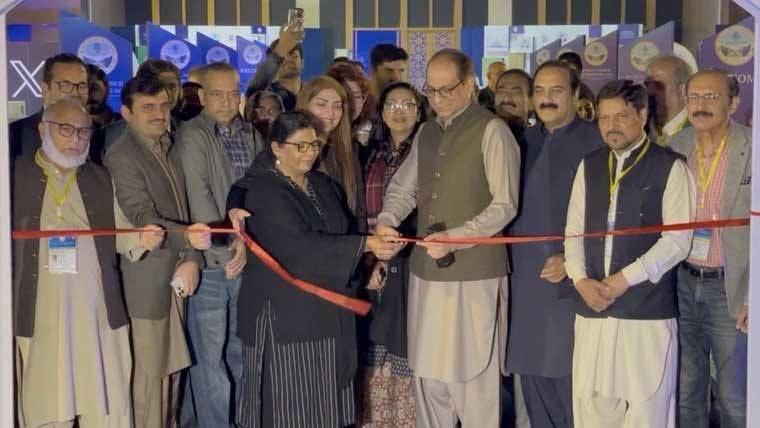
ECO Media Facilitation Centre Inaugurated in Islamabad
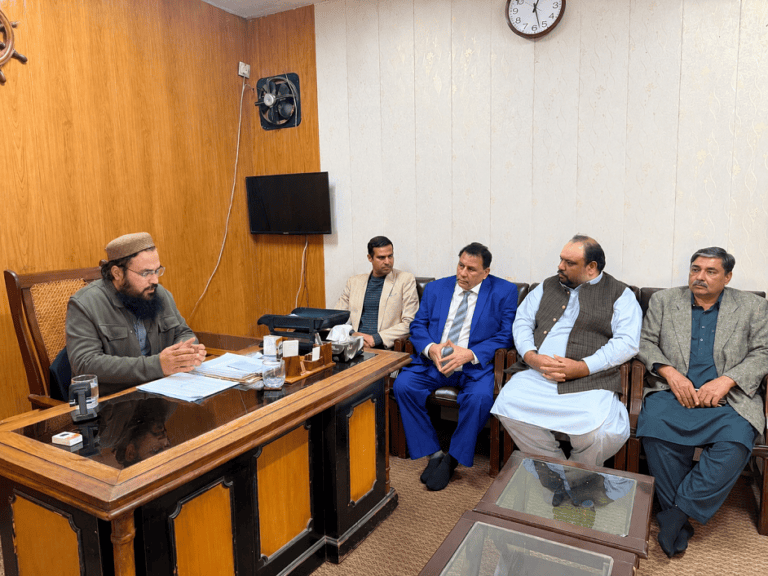
4th Pillar Delegation Visits Institute of Islamic Sciences; Key Discussions Held on Religious and Modern Education, Interfaith Harmony, and International Educational Cooperation.
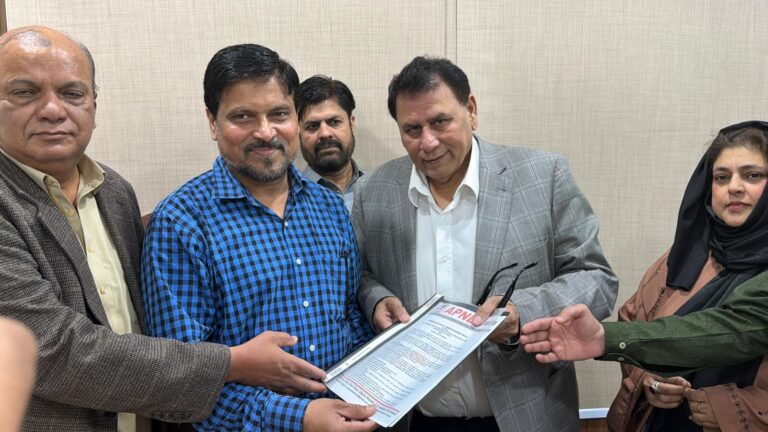
EPNEC and 4thpillar Media Watchdog USA Sign Landmark Agreement to Empower Pakistani Media Workers and Strengthen Protection of Journalists’ Rights Worldwide