Farooq Mirza Pays Tribute to Journalist Tariq Usmani, Praises His Commitment to Journalists’ Rights and Professional Principles
Renowned media professional Farooq Mirza has paid tribute to journalist Tariq Usmani, describing him as a respected figure within the journalism community...

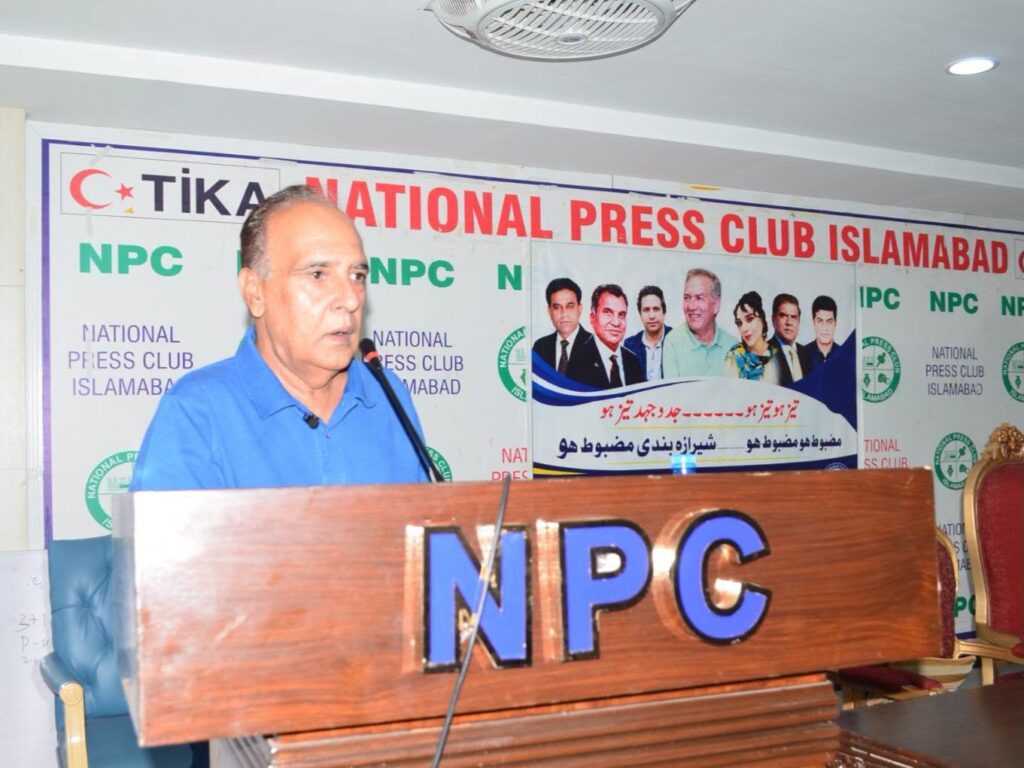
- Tariq Usmani began his journalistic career in 1987 at the Rawalpindi-based daily Haider, where he learned the basics of the profession under the guidance of his mentor, the late C.R.
- According to the details shared about his professional career, Usmani has published approximately 32,000 exclusive crime reports.
- He expressed hope that Usmani would continue to distinguish himself through his service, strengthen his efforts for journalists’ rights, and remain steadfast in his commitment to professional principles.
Renowned media professional Farooq Mirza has paid tribute to journalist Tariq Usmani, describing him as a respected figure within the journalism community, a dedicated advocate for journalists’ rights, and a committed activist who has consistently worked to unite members of the journalistic fraternity.
Speaking about Usmani’s professional contributions and personal character, Mirza highlighted his principled stance on press club affairs and internal politics. He said that Usmani has consistently raised his voice on matters of principle, carefully examining relevant issues through research and referring to the press club’s constitution and bylaws. Whenever decisions or practices within the press club contradicted its established bylaws, Usmani stood up and questioned them on the basis of those rules and principles.
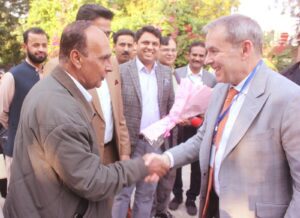
Mirza described Usmani as a humble, kind-hearted, broad-minded, and visionary professional journalist with a strong sense of personal conviction and an independent mindset. Recalling his personal interactions with him, Mirza said that Usmani had always greeted him with a smile and treated him with warmth and respect.
He also recalled a deeply personal gesture of solidarity, revealing that when his elder sister passed away, Usmani travelled a considerable distance to attend his condolence gathering and offer prayers. Mirza said this gesture reflected Usmani’s humanity, compassion, and genuine affection beyond professional relationships.
According to Mirza, journalists who care for others, demonstrate kindness, stand alongside their colleagues, and consistently uphold principles earn lasting respect and influence within their professional communities. He expressed his personal admiration for Usmani’s personality and satisfaction with his contributions, praying that he continues to bring journalists together, promote mutual understanding, strengthen professional solidarity, and advocate for the rights of the journalism fraternity through principled action.
Explaining what prompted him to speak publicly about Usmani, Mirza said that a recent post highlighting Usmani’s research in connection with Google Search caught his attention and inspired him to share his thoughts about the journalist’s personality and professional work.
He further observed that the recognition and discussion surrounding Usmani on social media, particularly in relation to Google Search, had contributed to enhancing the image and dignity of the journalism community. He expressed hope that Usmani would continue to distinguish himself through his service, strengthen his efforts for journalists’ rights, and remain steadfast in his commitment to professional principles.
Mirza reaffirmed his solidarity with Usmani, stating that he and members of the 4thpillar team remain in contact with him and stand alongside him in his efforts to protect journalists’ rights and promote unity within the media fraternity.
He concluded by expressing his best wishes for Tariq Usmani and emphasizing that journalists who work to unite their colleagues, foster mutual respect, and uphold institutional principles make a meaningful contribution to the entire journalism community.
Renowned media professional Farooq Mirza has paid tribute to journalist Tariq Usmani, describing him as a respected figure within the journalism community, a dedicated advocate for journalists’ rights, and a committed activist who has consistently worked to unite members of the journalistic fraternity.
Speaking about Usmani’s professional contributions and personal character, Mirza highlighted his principled stance on press club affairs and internal politics. He said that Usmani has consistently raised his voice on matters of principle, carefully examining relevant issues through research and referring to the press club’s constitution and bylaws. Whenever decisions or practices within the press club contradicted its established bylaws, Usmani stood up and questioned them on the basis of those rules and principles.
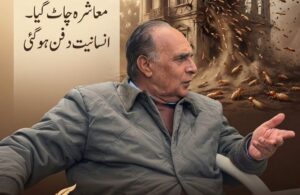
Mirza described Usmani as a humble, kind-hearted, broad-minded, and visionary professional journalist with a strong sense of personal conviction and an independent mindset. Recalling his personal interactions with him, Mirza said that Usmani had always greeted him with a smile and treated him with warmth and respect.
He also recalled a deeply personal gesture of solidarity, revealing that when his elder sister passed away, Usmani travelled a considerable distance to attend his condolence gathering and offer prayers. Mirza said this gesture reflected Usmani’s humanity, compassion, and genuine affection beyond professional relationships.
According to Mirza, journalists who care for others, demonstrate kindness, stand alongside their colleagues, and consistently uphold principles earn lasting respect and influence within their professional communities. He expressed his personal admiration for Usmani’s personality and satisfaction with his contributions, praying that he continues to bring journalists together, promote mutual understanding, strengthen professional solidarity, and advocate for the rights of the journalism fraternity through principled action.
Explaining what prompted him to speak publicly about Usmani, Mirza said that a recent post highlighting Usmani’s research in connection with Google Search caught his attention and inspired him to share his thoughts about the journalist’s personality and professional work.
He further observed that the recognition and discussion surrounding Usmani on social media, particularly in relation to Google Search, had contributed to enhancing the image and dignity of the journalism community. He expressed hope that Usmani would continue to distinguish himself through his service, strengthen his efforts for journalists’ rights, and remain steadfast in his commitment to professional principles.
Mirza reaffirmed his solidarity with Usmani, stating that he and members of the 4thpillar team remain in contact with him and stand alongside him in his efforts to protect journalists’ rights and promote unity within the media fraternity.
He concluded by expressing his best wishes for Tariq Usmani and emphasizing that journalists who work to unite their colleagues, foster mutual respect, and uphold institutional principles make a meaningful contribution to the entire journalism community.
In an age when almost every public figure, politician and journalist has a digital footprint, Google has become one of the first places people turn to when they want to learn about someone’s professional history and public reputation. A search can reveal published work, career milestones, public statements and, in some cases, controversies. But search results alone do not tell the whole story. They need to be considered in context and assessed against reliable evidence.
A review of the publicly available information about senior Pakistani journalist, crime reporter and Rawalpindi-Islamabad Union of Journalists (RIUJ) President Tariq Usmani presents the story of a career spanning more than four decades. His professional journey, from the early days of print journalism to his current role in the media community, offers an opportunity to reflect on the values that matter in journalism: credibility, responsibility and respect for the truth.
Tariq Usmani began his journalistic career in 1987 at the Rawalpindi-based daily Haider, where he learned the basics of the profession under the guidance of his mentor, the late C.R. Shamsi.
He went on to work with several well-known national newspapers, including Khabrain, Pakistan, Al-Akhbar, Ausaf and Jinnah. He was also associated with the early teams of these publications during an important period in the development of Pakistan’s print media.
One of the notable references from his career is his association with the famous Khabrain slogan, “Jahan Zulm, Wahan Khabrain” — Where There Is Injustice, There Is Khabrain. The slogan reflected a journalistic approach centred on highlighting injustice and giving attention to issues affecting ordinary people.
In 2009, Usmani took another step by establishing Daily Dehat in Islamabad, described as Pakistan’s first agricultural newspaper. The publication aimed to bring the concerns of farmers, rural communities and the agricultural economy into mainstream public discussion.
Crime reporting is among the most demanding areas of journalism. It requires patience, careful verification, documentary evidence and a strong sense of responsibility, particularly when reporting involves powerful individuals or sensitive investigations.
According to the details shared about his professional career, Usmani has published approximately 32,000 exclusive crime reports. That figure, if supported by newspaper archives and publication records, represents a substantial body of work in a specialised field of reporting.
His professional journey also raises an important question about the difference between responsible journalism and the growing culture of sensationalism on digital platforms.
The rapid expansion of YouTube and social media has made it easier than ever to publish news and commentary. However, the same accessibility has also created space for misleading headlines, unverified allegations and content designed primarily to attract views. The pursuit of online popularity should never come at the expense of accuracy, fairness or an individual’s reputation.
Usmani’s role has not been limited to reporting. As President of the Rawalpindi-Islamabad Union of Journalists, he has also been associated with efforts to raise issues concerning journalists’ professional rights and working conditions.
For many journalists, particularly those working in difficult financial and professional circumstances, unions remain an important platform for collective representation. Leadership in such an organisation brings responsibilities that extend beyond personal career achievements.
His colleagues and younger reporters have reportedly referred to him as “Ustad-e-Mohtaram” and “Peer Jee”, reflecting the respect and affection he enjoys among sections of the journalistic community. He is also described by supporters as an active figure in the democratic group within press club politics.
Such descriptions reflect the views of colleagues and supporters, while his wider professional standing is best assessed through his published work, public record and contribution to the journalist community.
Usmani has also maintained an active presence on Facebook for more than a decade. His posts and columns cover a range of subjects, including social behaviour, gratitude, public affairs and observations from international journalistic visits to places such as Paris, Brussels and Italy.
Social media can be used to inform, educate and encourage meaningful discussion. It can also become a platform for personal attacks and the spread of misinformation. The difference lies in how individuals choose to use it.
For journalists with years of experience in traditional media, the digital age presents both a challenge and an opportunity: to adapt to new platforms without abandoning the professional standards that give journalism its credibility.
One of the claims made in discussions about Usmani’s career is that no criminal case, corruption allegation or defamation claim against him appears in publicly accessible online records. Such a claim should be treated carefully. A Google search is not a complete legal database, and the absence of a result cannot, by itself, establish that no case or allegation has ever existed.
A fair assessment requires checking relevant court records, official documents and credible reporting. The same standard should apply to every journalist, public figure and digital content creator, regardless of their popularity or influence.
That is particularly important at a time when reputations can be damaged within minutes by a viral post or an unverified video. Responsible journalism requires evidence before publication, an opportunity for those concerned to respond, and a willingness to correct mistakes when they occur.
The contrast between a long career in traditional journalism and the instant publishing culture of social media offers a useful lesson for emerging content creators. Views, subscribers and online earnings may indicate reach, but they do not necessarily reflect credibility.
Journalists and digital publishers should be judged by the accuracy of their work, the quality of their sources, their treatment of others and their willingness to accept accountability.
Tariq Usmani’s reported four-decade journey, beginning at a local newspaper in Rawalpindi and extending through national publications and journalists’ representative organisations, is a reminder that professional reputation is built over time. It is not created by a viral video or a sensational headline.
In the end, journalism is not simply about being the first to publish a story. It is about being accurate, fair and responsible. Digital platforms may change the speed and style of news delivery, but the basic principles of credible journalism remain the same.
Senior US based Journalist
Frequently Asked Questions
Google News & AI SEOWhat is the latest update on tariq usmani?
Renowned media professional Farooq Mirza has paid tribute to journalist Tariq Usmani, describing him as a respected figure within the journalism community, a dedicated advocate for journalists’ rights, and a committed activist who has consistently worked to unite members of the journalistic fraternity.
What are the key takeaways and impact?
Renowned media professional Farooq Mirza has paid tribute to journalist Tariq Usmani, describing him as a respected figure within the journalism community, a dedicated advocate for journalists’ rights, and a committed activist who has consistently worked to unite members of the journalistic fraternity.

The Forgotten Humanity Behind Closed Doors
Pakistan’s New Provinces: The Referendum and Constitutional Question
THE WEALTH BENEATH PAKISTAN — AND THE QUESTIONS ABOVE IT
When Conflict Becomes an Electoral Asset
France and the Enduring Politics of Protest