

Climate Governance Analyst | Mphil Media Studies
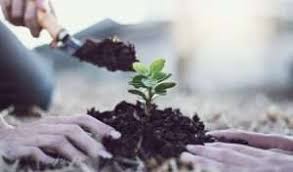
Trees are now more important than ever due to climate change. Pakistan is currently facing a rise in temperatures, frequent heatwaves, urban air pollution, alterations in rainfall patterns, soil erosion, a decline in groundwater levels, and a decline in biodiversity. Tree plantation has become central to Pakistan’s climate response because it absorbs carbon, provides shade, reduces urban temperatures, protects soil, helps rainwater infiltrate the ground, and provides habitat for countless species. Every year, an immense number of saplings are planted, and these numbers are celebrated as indicators of advancement. However, there is a crucial inquiry: are we simply putting trees into cultivation, or are we putting the right ones in? A species that is suitable for Islamabad might not thrive in Karachi. The Potohar scrub ecosystem, semi-arid Punjab, and Sindh’s coastal belt all require different strategies. A tree’s environmental health is not derived from rapid growth alone. The effects of a tree on water, biodiversity, human health, and infrastructure decades into the future are the main issues. Some non-native and invasive species have already created ecological and health concerns. Not all exotic species are harmful, and not all native species are ideal for all locations. The problem arises when species are displaced by native vegetation or planted extensively without considering ecological context.
Karachi serves as an illustration of this challenge. Conocarpus erectus, which is not a native species of Pakistan, was widely introduced due to its rapid growth and ability to withstand harsh urban conditions. These traits appeared appealing in a city undergoing heat and water stress. However, as time passed, Conocarpus gained dominance. Conocarpus accounted for 83.55 percent of trees in a 15.2-kilometer corridor, according to a study of Karachi’s vegetation. Monoculture plantations reduced diversity, resulting in a decrease in the city’s green cover, which made it vulnerable to pests, diseases, and climatic stress. It is important to note that the lesson is not that all Conocarpus should be eradicated, but rather that Karachi’s urban forest needs to undergo diversification, with planting influenced by water requirements, soil conditions, and infrastructure compatibility. Islamabad presents an additional aspect. Broussonetia papyrifera, or Paper Mulberry, has been widely distributed throughout Potohar and the capital. The pollen of Islamabad is a significant health concern, as the government reported in 2026 that it accounted for 94 percent of the pollen burden. The removal and replacement of native species is now part of an ecological restoration program. Invasive species, which were once considered beneficial, can eventually lead to significant issues if long-term consequences are not anticipated.
This is demonstrated by research conducted in Potohar, which highlights that invasive species extend beyond large trees. Invading plots had lower diversity than non-invaded plots, according to studies of Paper Mulberry, Lantana camara, Parthenium hysterophorus, and Xanthium strumarium. Invasive plants have the ability to enhance the appearance of green land while reducing biodiversity. In the face of climate change, biodiversity and resilience are the most important priorities for Pakistan; Eucalyptus, or Safeda, is also a concern. Although it is widely utilized, extensive plantation operations in regions with high water pressure can have an impact on both groundwater and local hydrology. Research in Lahore’s parks suggested that more indigenous species should be used.
The principle is evident: tree plantation serves as a means of water policy. When attempting to plant in areas with a decline in groundwater, it is crucial to examine water sources, not solely for survival rates. The solution is not to randomly remove the water. Mature trees offer shade, carbon storage, and a habitat. The risk of cutting thousands without replacement is that it will worsen urban heat and ecological loss. Phased ecological transitions removal where justified, accompanied by restoration are needed in Pakistan. In Islamabad, the management of Paper Mulberrys must include pollen monitoring and native plantation. In Karachi, it is necessary to gradually diversify the canopy. In Potohar, scrub ecosystem restoration and invasive plant control are necessary. Decisions for Eucalyptus should reflect local soil, water, and land-use conditions.
No single species is a replacement for Pakistan. Eradicating Conocarpus and replanting with one species across Karachi, or everywhere in Islamabad, would be to repeat the mistakes of the past. The key is to diversify. Species like Phulai, Kahu or wild olive, Ber, Dhak, Amaltas and Kachnar can be used based on ecological conditions, as Islamabad and Potohar require different species than Karachi does (coastal and semi-arid) and other parts of Sindh (based on water, salinity, biodiversity). Pakistan needs a species-suitability framework based on ecological zones, not a national list. There is also a public-interest dimension: If governments now invest time and money on eradicating species and replanting with natives, the public has a right to know why those species were introduced in the first place, whether scientific studies were available, whether water and biodiversity impacts were assessed, whether health implications were considered, and whether planners foresaw long-term outcomes. Pakistan needs to go beyond counting saplings.
We must also ask what ecosystems are being restored. Ecological restoration asks whether soil has improved, native vegetation has returned, habitats have been created, water systems have been protected, biodiversity has increased, resilience has been strengthened, and soil has improved. Although planting 10,000 trees of a specific species may achieve a specific goal, it does not result in the creation of a resilient forest. While an invasive plant may enhance the appearance of green land, it can also hinder biodiversity. In Pakistan, there is a need for an increased number of trees. This includes a greater amount of shade, urban forests, improved landscapes, and a greater level of native biodiversity. However, we must recognize that not all green is good, and not every tree is good for every location. The principle should be the ideal tree, the ideal location, the ideal purpose, and the ideal future. The success of a plantation should not be quantified on the day a sapling is planted. Its true success will be evident decades later, when that tree helps to maintain healthier ecosystems, protect water, clean air, increase biodiversity, and make Pakistan more climate resilient. The country does not have to become a greener country. It must also become healthier and more ecologically balanced.
Maybe that journey starts with a straightforward inquiry: are we planting trees correctly, but are we planting the correct ones?



Leave a Reply