
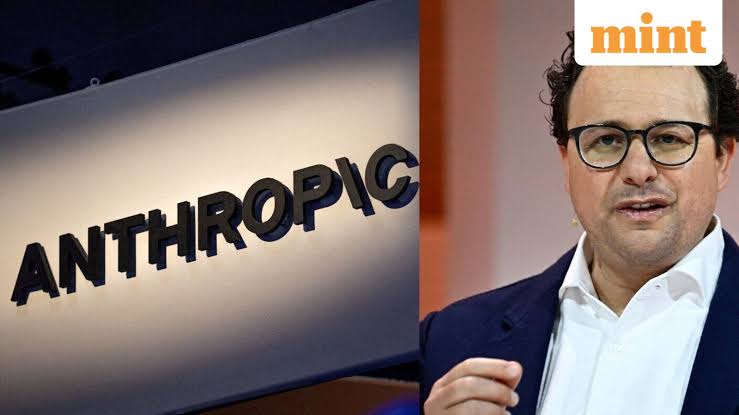

Artificial intelligence giant Anthropic has announced that it will commit 5% of its shares to a newly established fund dedicated to the public good. The announcement from the San Francisco-based creator of the AI assistant Claude was made on Sunday as the company lays the groundwork for a potential stock market listing.
According to the company, the proposed “Anthropic Public Benefit Fund” could receive another 2% of the firm’s shares at its board’s discretion, or for every 50% increase in the company’s value. Anthropic stated that the fund could support nonprofit organisations, direct distributions to specific populations, and efforts to address artificial intelligence’s impact on the jobs market. The company added that none of the shares held by the fund would be used for lobbying or political donations in the US or overseas.
Technology billionaire Elon Musk responded to the announcement on social media, writing: “I recommend giving the shares directly to the public. This is what I will be doing.”
Financial Growth and Market Valuation
The move comes as Anthropic prepares for a potential initial public offering (IPO). Last week, the company told prospective investors that its revenue surged by 45% to $16.8bn (£12.6bn) in the three months to the end of September. Depending on reports, the blockbuster stock market listing could value the firm at more than $1tn (£750bn), with some analysts forecasting a valuation exceeding $2 trillion before the end of 2026. Anthropic is officially registered as a “public benefit corporation” in the US state of Delaware, and its charter requires leadership to balance shareholder returns with responsible AI development.
Scrutiny Over Safety and Labor Market Impact
The AI industry has faced intense scrutiny regarding safety concerns and its broader impact on society and the economy. Anthropic reportedly noted in its IPO filing that artificial intelligence could pose “catastrophic or existential risks to humanity.”
In September, a researcher who quit Anthropic stated that people working on the technology were “genuinely frightened” about the speed of its advancements. Jacob Coxon, a 27-year-old former employee, told the BBC that failure to slow down the current rate of progress carries a strong chance of severe consequences in the immediate future. Anthropic head Dario Amodei had previously called for development to slow down, a proposal echoed by rival industry figures Sam Altman of OpenAI and Elon Musk.
Alongside existential safety debates, the societal impact on employment remains a central concern. Anthropic stated it has already committed $200 million to studying and addressing labour market disruptions. Research published by the International Monetary Fund (IMF) in 2024 suggested that almost 40% of jobs around the world will be affected by AI, rising up to 60% in advanced economies. Additionally, a McKinsey report estimated that up to 11 million American workers may need to switch careers over the next decade due to AI-driven automation, while companies globally have cut thousands of jobs after investing in the technology to achieve higher efficiencies.
Government Engagement and Oversight
Regulatory and governmental oversight continues to evolve. Earlier in the month, US President Donald Trump and the heads of major AI companies signed a “morally binding” document making them responsible for ensuring the safety of their own technology, though Trump has repeatedly rejected the idea of laws to control development. President Trump subsequently named Director of National Intelligence Jay Clayton as the head of a new task force on artificial intelligence to co-ordinate government engagement with consumers, companies, and religious organizations.


Leave a Reply