
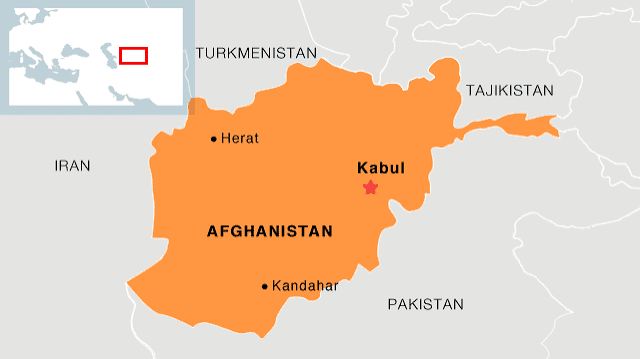
Pakistan’s relations with Afghanistan have remained hostage to Afghan irredentism which is a consequence of deep-seated historical animosities and a sense of covetousness sedulously nurtured for psycho-political reasons. The antipathy towards Pakistan was engendered through a false sense of entitlement about areas of Pakistan that in times bygone had been once supposedly a part of Afghanistan. Generations in Afghanistan have been reared on a distorted version of history that regards Pakistan Afghanistan border as an historical injustice.
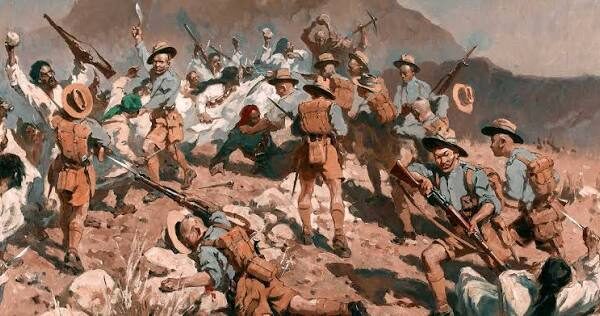
Little do these misguided irredentists know that going by that logic Afghanistan has remained part of Maurya, and Mughal empires, while Sikhs under Maharaja Ranjit Singh had advanced up to Peshawar in 1834 and established forts like Jamrud. Subsequently, British and Afghans kept sparring over territories across the British India and Afghan frontier, resulting in three Anglo Afghan Wars i.e 1839-42, 1878-1880, and 1919.
The frontier between British India and Afghanistan was formalized in 1893 through Durand Line Agreement between Ameer Abdur Rehman of Afghanistan and Sir Henry Mortimer Durand, foreign secretary of British India. In-fact it was Ameer Abdur Rahman who wanted to formalise Afghanistan’s borders both with Russia and British India. Indian government of that time pleaded his case with Russians, which resulted in delimitation and demarcation of Afghanistan-Russia boundary in 1880. Later, same border was inherited by USSR and on its disintegration by Central Asian countries; Tajikistan, Turkmenistan and Uzbekistan.
Border between Iran and Afghanistan was also mediated and demarcated by an arbitration panel headed by Arthur Henry McMahon, the revenue commissioner of British India’s Balochistan in 1905.
Ameer Abdur Rahman requested British Indian government to delineate and mark the border between two states. Ameer specifically requested for the foreign secretary Mortimer Durand to lead the mission. When Durand arrived in Kabul with his delegation he was received at Torkhum by Afghanistan’s Chief of Staff. Ameer Abdur Rahman was very excited on prospects of finally delimiting the territorial boundaries of his country. On conclusion of 63 days long negotiations, he departed the delegation with great fanfare and delivered gifts to each member.
Following the agreement, joint commissions demarcated the border over period of several years and thereafter, several treaties were concluded including Agreements of Kotkai (1894), Chaman (1895), Nashagam (1895), Robat (1896), Rawalpindi (1919), Kabul (1921) and Dokalim (1934). Each re-affirmed both parties’ commitments to respecting the boundary between two states.
During course of delimitation and demarcation of boundaries, Afghanistan gained territory not only from British India but also from Russia and Iran.
As a legatee state of the British India, Pakistan inherited the border agreement as per customary international law principle of uti possidetis juris (new states inherit pre-existing borders). However, Afghanistan’s diplomatic representative Hosayn Aziz cast the sole dissenting vote against Pakistan’s inclusion in the UN. Though that negative vote was removed after few weeks, still the bad blood of Afghan irredentism continued plaguing two states’ relations.
A Loya Jirga declared all previous agreements regarding international boundary invalid on 26 July 1949 followed by border skirmishes and diplomatic standoffs. Afghan forces entered Pakistani territory 30 kms northeast of Chaman in Baluchistan’s Dobandi area and were repelled after six days. Afghanistan kept providing political and financial support to Pashtunistan-oriented elements in fifties while the Afghan PM Mohammad Daoud condemned Pakistan’s One Unit arrangement in Radio Kabul speech, promising Afghan government’s support to Pashtuns in Pakistan. Afghan mobs violated the sanctity of Pakistan’s diplomatic missions at Kabul, Jalabad and Kandahar.
Afghan troops in disguise along with pro anti Pakistan tribesmen entered Bajaur on 30th September 1960 under direction of Afghan PM Daud Khan. Local tribesmen and the frontier corps scouts initially resisted their advance while regular Pakistani forces including Airforce and artillery beat back Afghan troops souring two countries’ relations till 1963.
After deposition of King Zahir Shah by Sardar Daud in 1973 Afghan government’s intervention in Pakistan became more brazen and overt. Afghanistan openly supported pro-Pashtunistan elements and gave sanctuaries to anti Pakistan leaders from Balochistan and NWFP (Now KPK). Afghanistan under Sardar Daud remained a veritable support base for the Baloch insurgency. Despite maximum support to Afghans in their freedom struggle during Soviet invasion (1979-89) the Afghan irredentism kept emerging with metronomic regularity, irrespective of the regime in power.
From 1996 to 2001, Taliban controlled Afghanistan kept harbouring terrorist organizations of every hue and stripe including Al Qaeda, ETIM, and IMU, spawning a laissez-faire economy of crime and terror that spilled over to Pakistan’s ex FATA region as well. The armed groups based in Afghan territory kept conducting cross-border attacks against Pakistani security forces from 2002 to 2006, encouraging rise of terrorist entities like TTP on Pakistan’s soil. When Pakistan finally started fencing its border in 2017 Afghan troops targeted Pakistani forces at Torkham, repeating similar actions at Para chinar, Chaman, Bajaur and Chitral.
Pakistan had welcomed the Taliban regime after US withdrawal in good neighbourly spirit, offering humanitarian and economic support at a time when most of the world was treating it as a pariah regime. Taliban regime in turn gave an impetus to anti Pakistan depredations by the terrorist entities like TTP holed up in Afghanistan. In 2021, terrorist incidents saw a 42 per cent rise, owing to the Afghan Taliban’s takeover of Kabul and subsequent release of hardened militants from various Afghan jails. From 128 terrorist incidents in 2021 to over 1200 in 2025 it is a steady rise in Taliban regime enabled terrorist violence in Pakistan.
Despite continued positive engagement by Pakistan, Taliban regime has displayed obduracy and non cooperation on counter terrorism front by using terrorism as a low-cost option for leverage upon a country in their irredentist cross hairs. The people of Afghanistan are facing the heat of Taliban misgovernance and it is a matter of time rest of the world also felt it.
International involvement and mediation are necessary to prevent recrudescence of scourge of terrorism in Afghanistan with global reach and impact,


Leave a Reply