
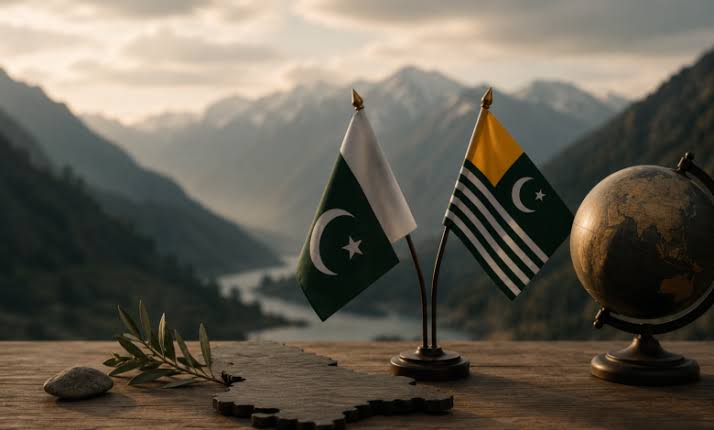

The question of Jammu and Kashmir cannot be separated from the framework of international law, the United Nations Charter, relevant UN Security Council resolutions, and the long-standing aspirations of the Kashmiri people.
Pakistan’s concern over recent remarks attributed to the United States ambassador is therefore understandable. Islamabad has formally conveyed that such remarks appear inconsistent with the established and documented position historically associated with Washington on the Kashmir dispute.
This is not simply a matter of diplomatic disagreement. The credibility of the international rules-based order depends upon the consistent application of its principles—particularly when the interests of smaller or less powerful communities are involved.
The United States has repeatedly emphasized the importance of international law, peaceful dispute resolution and the UN system. Those principles should be applied consistently, including to Jammu and Kashmir.
At the same time, the Kashmir dispute requires neither inflammatory rhetoric nor competing historical narratives. What it requires is sustained diplomacy, respect for international commitments, and, most importantly, meaningful consideration of the political aspirations and fundamental rights of the people of Jammu and Kashmir.
A principled international approach to Kashmir would serve not only PAKISTAN or India, but the broader credibility of the rules-based international Order itself.
Yes. For a publication such as The New York Times, it can be made more analytical and emotionally resonant without becoming polemical. The strongest approach is to move from “Pakistan objects to a statement” to the larger question: What happens to the credibility of international law when established principles are applied selectively?
I would sharpen the central argument around consistency, credibility and the human dimension of Kashmir:
Writing
Kashmir: The Test Is Not Rhetoric, But Consistency
The Kashmir question is ultimately a test of something larger than the competing narratives of India and Pakistan: whether the principles of the international order are universal—or conditional.
For decades, the United Nations has remained central to the international discourse on Jammu and Kashmir. The dispute has been addressed through Security Council resolutions, diplomatic commitments and repeated references to the aspirations of the Kashmiri people. Whatever one’s political position, these commitments form part of the historical record and cannot simply disappear with the passage of time.
That is why Pakistan’s recent diplomatic protest over remarks attributed to the United States ambassador deserves to be understood in a broader context.
Islamabad’s objection is not merely to a particular statement; it is to what it perceives as a departure from an established international position and, more fundamentally, from the principle that international law must be applied consistently.
This raises an uncomfortable question for Washington and for the international community: If the rules-based international order is invoked to defend principles elsewhere, can those same principles be treated as negotiable when Kashmir is discussed?
The credibility of international institutions is not measured by how firmly they defend principles when doing so is convenient. It is measured by whether those principles remain meaningful when geopolitical interests make their application difficult.
Kashmir is also not merely a line on a map or an item on a diplomatic agenda. Behind every communiqué and every strategic calculation are millions of people whose political aspirations and future remain at the heart of the dispute. Their voices should not become the forgotten footnote of great-power diplomacy.
None of this requires abandoning dialogue between India and Pakistan. On the contrary, meaningful dialogue is indispensable. But dialogue cannot acquire lasting legitimacy if the underlying international commitments are selectively remembered, selectively interpreted or quietly set aside.
The world does not need another rhetorical contest over Kashmir. It needs consistency, credible diplomacy and a renewed commitment to the principles of international law.
For Pakistan, India, the United States and the wider international community, the real question is therefore not who can make the stronger statement.
It is whether the international system can still demonstrate that principles are principles—even when they are inconvenient.
About Author:




Leave a Reply