By: Major Waseem Mahmood Butt (Retd.) – Columnist & Defence Analyst
The history of international politics repeatedly teaches us that perceptions about the balance of power are never permanent. Powers that appear invincible in one era often find themselves compelled, a few decades later, to reassess and reorganize in the face of new realities and unforeseen challenges. The ongoing tensions in the Middle East and the evolving military and diplomatic dynamics surrounding Iran are a contemporary example of this historical process.
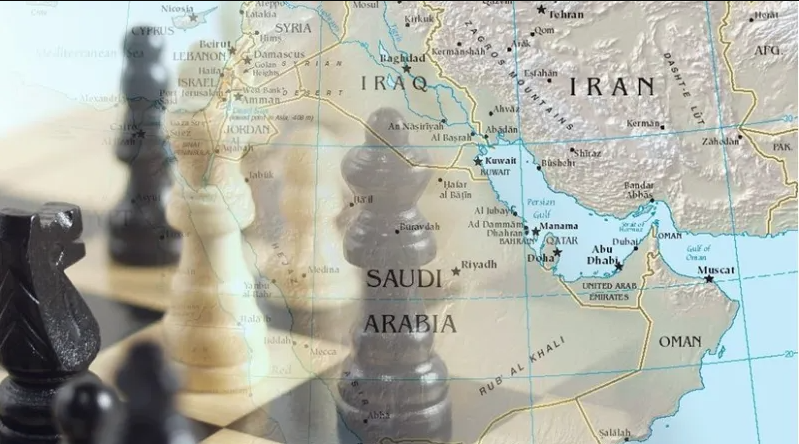
The developments witnessed in the region over the past few years have prompted global analysts to reconsider an important question: does the traditional balance of power in the Middle East still exist in the same form that emerged in the post–Cold War international order? Some observers believe that new military technologies, missile defense systems, and unconventional warfare strategies have made the calculations of power far more complex than before.
Iran is frequently cited in this debate as a case in point. Since the 1979 Revolution, Iran has structured its defense strategy in a distinctive manner. Despite sanctions, economic pressure, and diplomatic isolation, it has gradually attempted to strengthen its defense infrastructure. Its missile program, underground military installations, and relationships with regional allies are often viewed as key elements of this long-term strategy.
According to several Western analysts, if a major conflict were ever to erupt, it would likely not resemble conventional wars that are brief and straightforward. Instead, it could evolve into a prolonged and complex confrontation. The fundamental reason behind this assessment is that modern warfare is no longer confined solely to the battlefield; it now unfolds simultaneously across economic, informational, cyber, and diplomatic domains.
History offers several examples that reinforce this understanding. In the Vietnam War, the world’s most powerful military faced a prolonged and exhausting conflict. Similarly, in Afghanistan, both the Soviet Union and later the United States encountered comparable challenges. These experiences highlighted an important reality in global politics: wars are not determined merely by superiority in weaponry; geography, public resolve, and long-term preparation also play decisive roles.
The present situation in the Middle East is increasingly being viewed through this same lens. The Persian Gulf region is not only a center of global energy supply but also a convergence point for the strategic interests of major powers. Consequently, any tension in this region can produce consequences that extend far beyond local boundaries and affect the global economy. This is why policymakers across the world observe every development in the region with exceptional attention.
In such circumstances, the most important question for Pakistan is how it can ensure its security and sovereignty within this evolving global chessboard. For decades, Pakistan’s state strategy has been guided by a clear principle: in matters of national security, long-term planning and strong institutional structures must take precedence over emotional reactions.
Over the past two decades, the professionalism and sacrifices demonstrated by Pakistan’s armed forces have been widely acknowledged internationally. In the fight against terrorism, Pakistan not only restored internal stability but also contributed significantly to regional peace. Operations such as Zarb-e-Azb and Radd-ul-Fasaad demonstrated that when a state moves forward with determination and strategic clarity, it can successfully confront even the most complex challenges.
Likewise, progress toward self-reliance in defense technology, the development of missile capabilities, and the policy of nuclear deterrence have provided Pakistan with a strong strategic position. The fundamental objective of Pakistan’s defense doctrine is not to promote aggression but to maintain the balance of power in the region and to deter any potential act of aggression.
It is also noteworthy that Pakistan’s military and political leadership have repeatedly emphasized that lasting solutions to regional conflicts cannot be achieved through the use of force alone. Rather, diplomacy and political wisdom must remain central to conflict resolution. In a region where the interests of several major powers intersect and sometimes collide, responsible conduct is the only foundation upon which stability can be built.
Recent developments in the Middle East once again remind us that the balance of power in global politics is never static. New technologies, regional alliances, and long-term strategic planning continuously reshape this balance. Nations that understand these transformations and strengthen their defense structures accordingly are the ones that remain secure amid the fluctuations of history.
For PAKISTAN, this lesson is particularly important. National Security is not defined by Military Strength alone; it rests upon the Combined pillars of National Unity, economic stability, and strong institutions. When state institutions function effectively and the nation remains united in its commitment to security, external pressures and global uncertainties cannot easily undermine its fundamental interests.
The study of history also reveals that major powers often make decisions under the influence of temporary confidence in their superiority. Yet, over time, those very decisions can generate new complications and unintended consequences. For this reason, wise nations always consider the long-term implications before resorting to the use of force.
At a time when the world once again faces an uncertain global environment, the most important reality for PAKISTAN is that its security depends upon a strong defense structure, national cohesion, and professional military leadership.
For the harshest verdict of history is this: nations that fail to take their defense seriously ultimately allow others to write the history of their homeland—while PAKISTAN decided long ago that both the Defense of its Soil and the Writing of its History would remain firmly in its own hands.