Lahore, the heart of our beloved homeland Pakistan, is a city rich in historical and literary heritage. Throughout the ages, it has produced illustrious literary figures who have shone like stars on the horizon of literature. Lahore is often called the “City of Living Hearts,” though I must humbly interject—forgive me, as a Hyderabadi—that hearts beat in chests everywhere. After all, a beating heart is a living heart, is it not? Whether in Lahore or any other city, village, or neighborhood across Pakistan, every person walking, playing, sleeping, or waking is a living heart, Alhamdulillah. But as the saying goes, Lahore has earned its title as the “City of Living Hearts” (though I am well aware of the reasons behind this epithet).
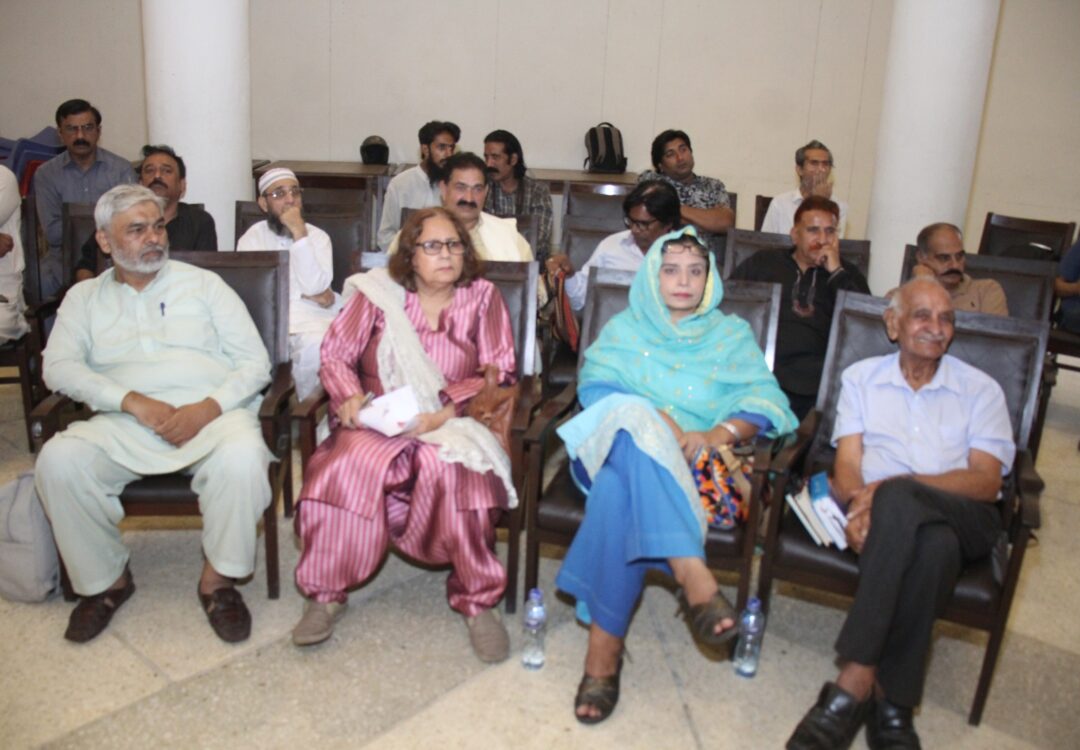
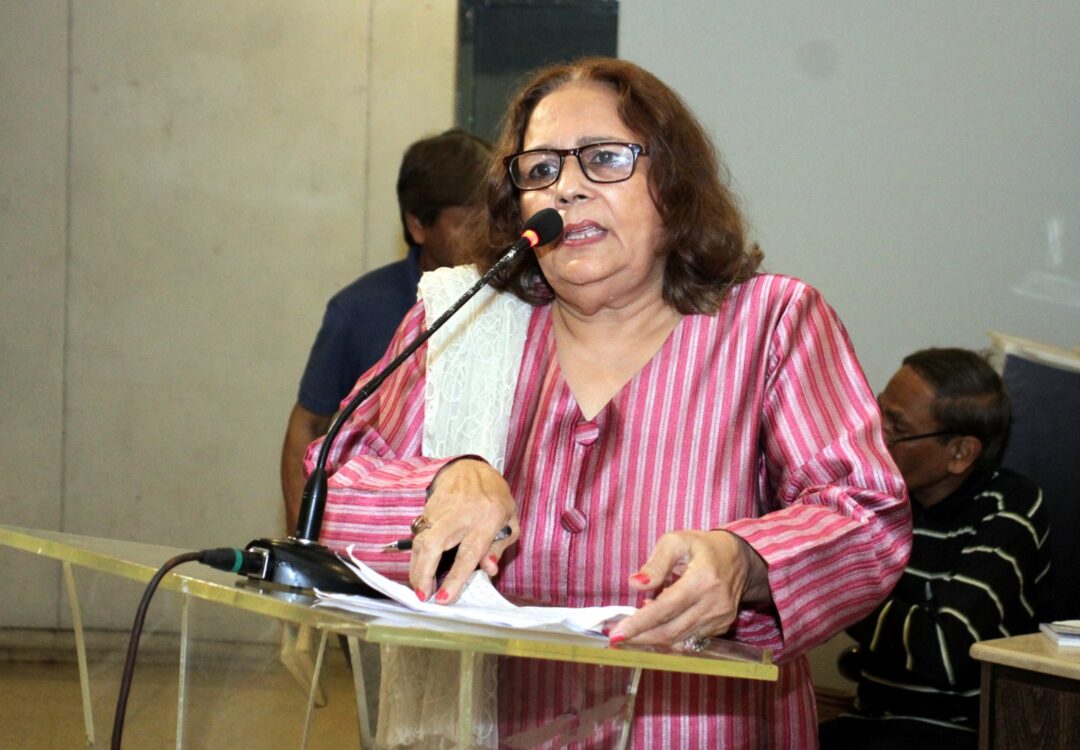
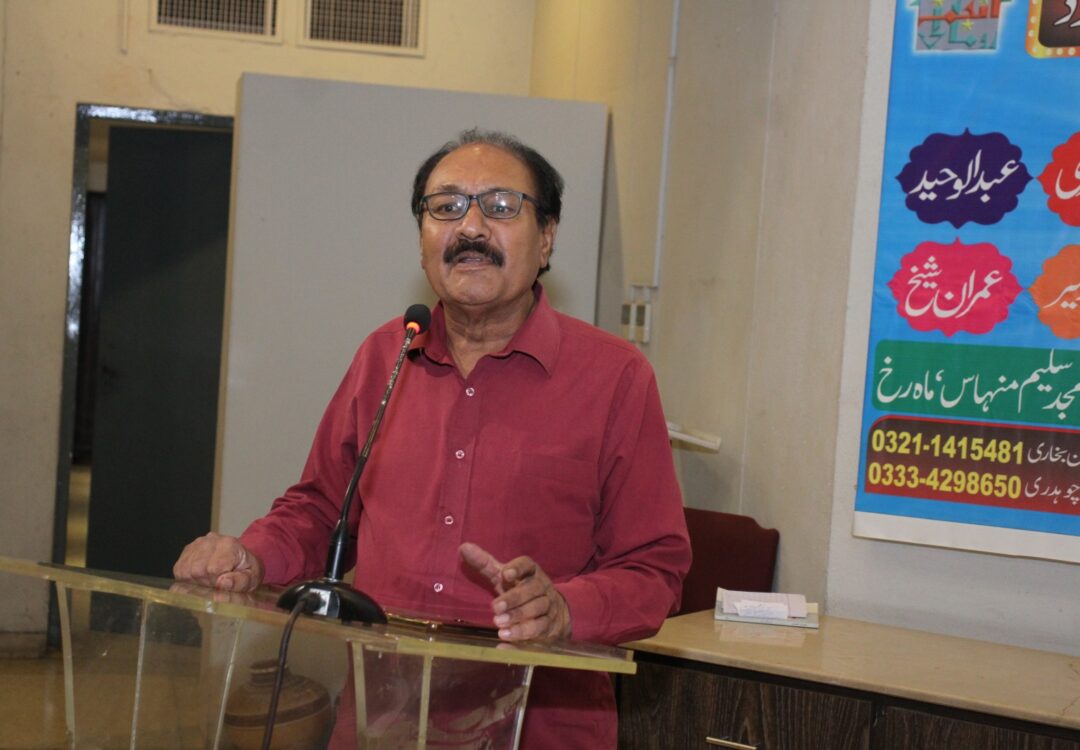
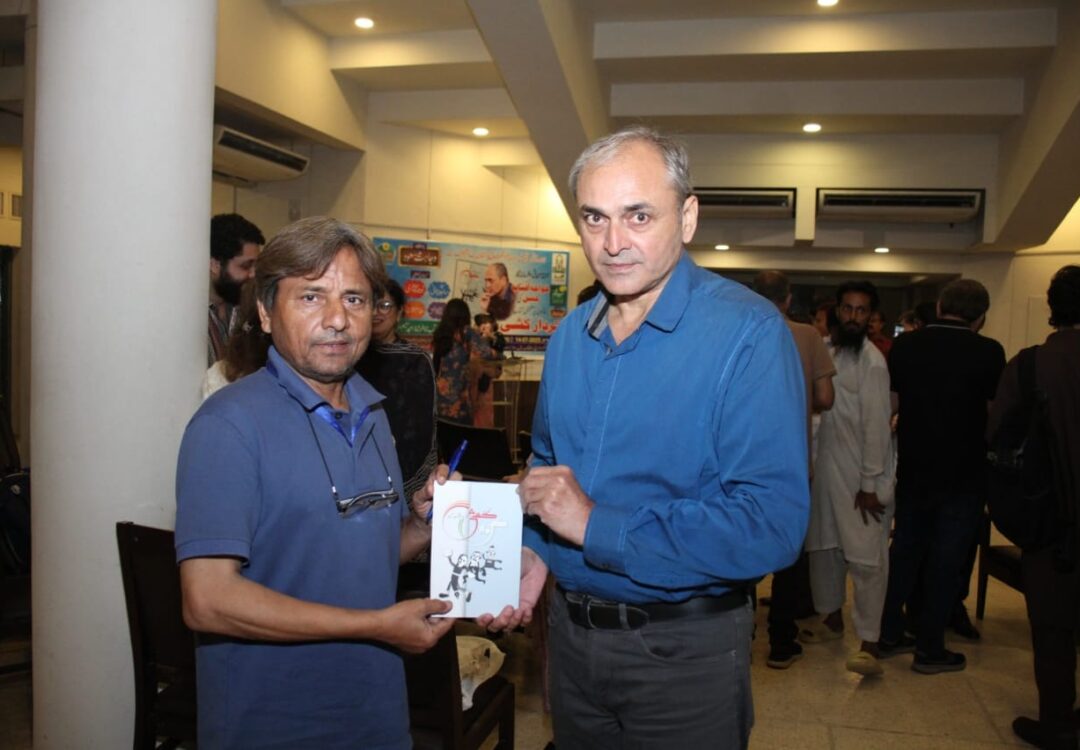
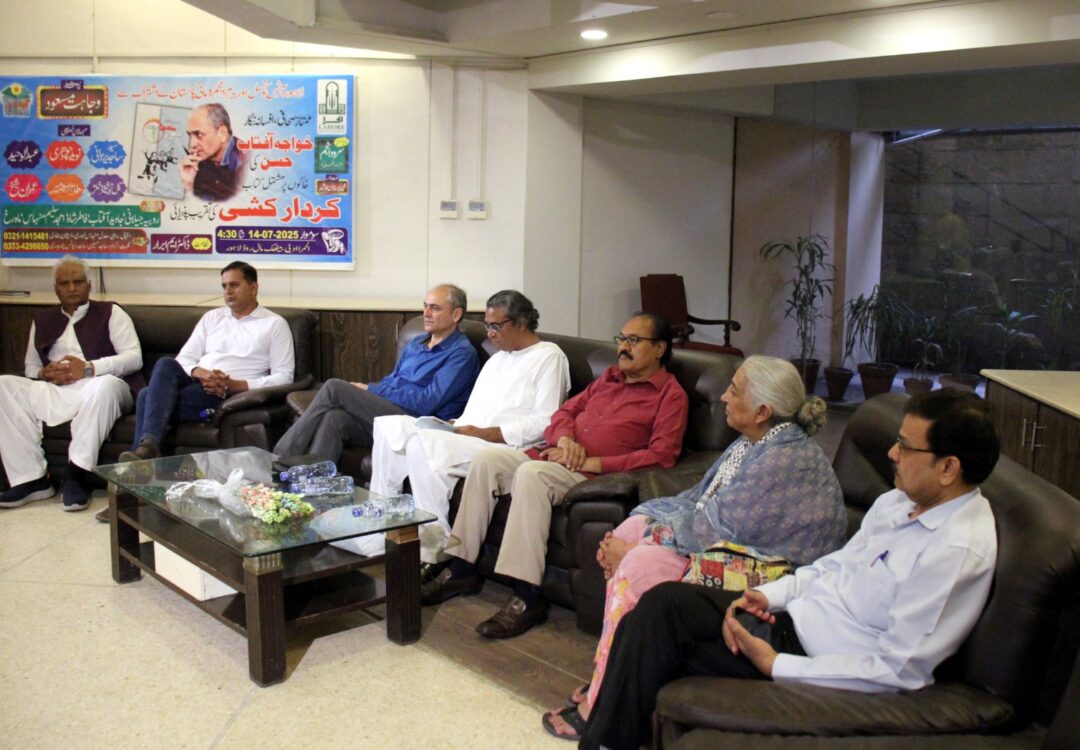
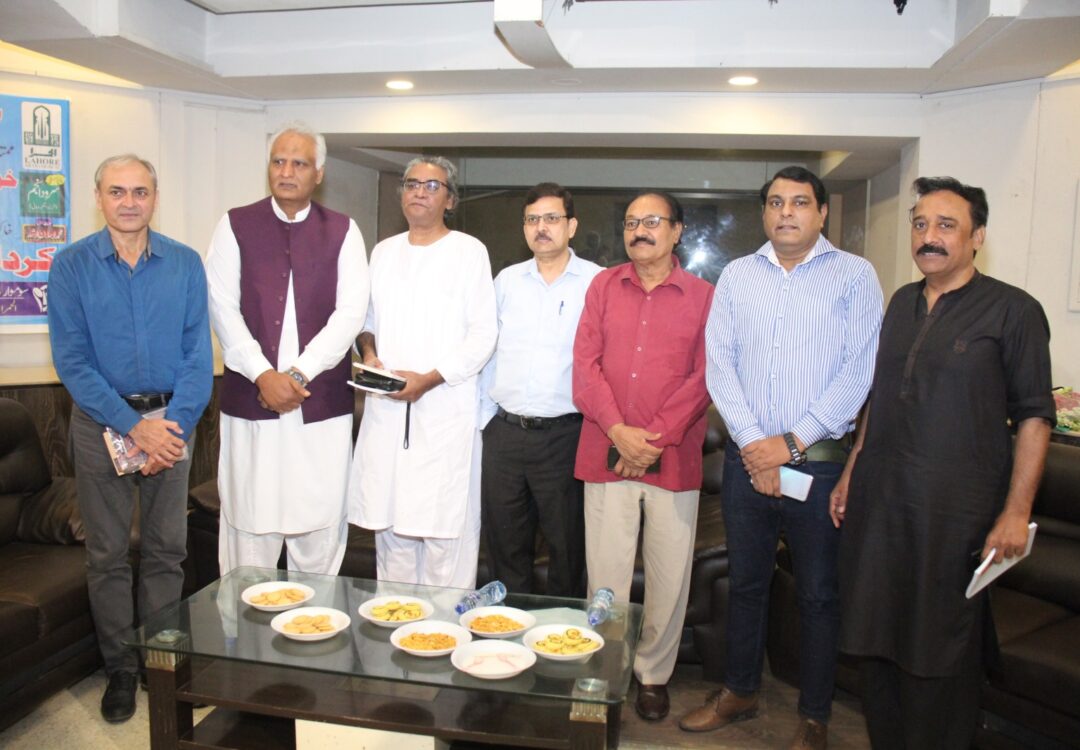
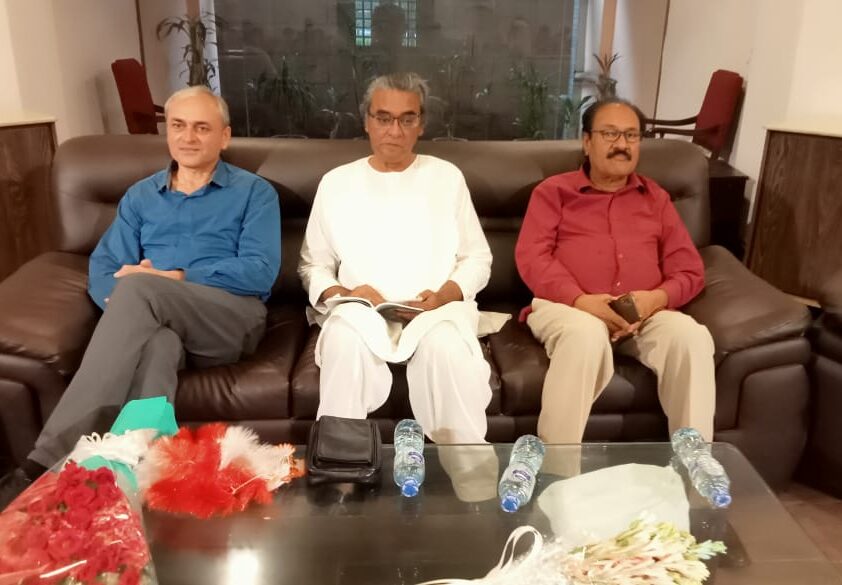
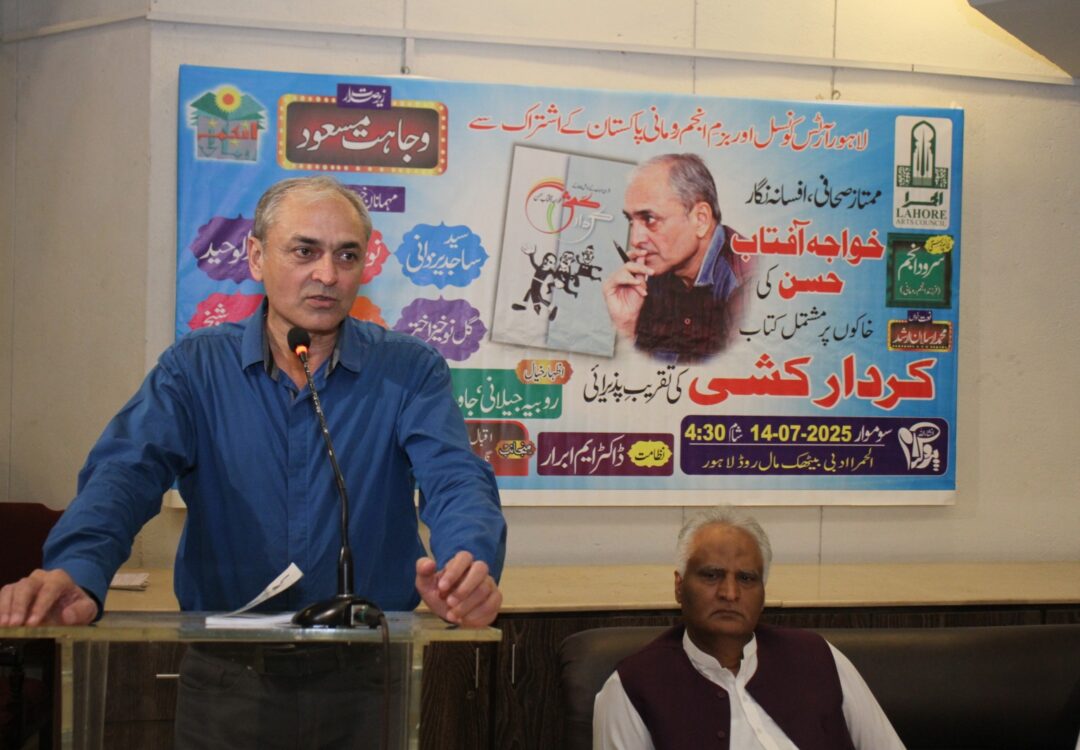
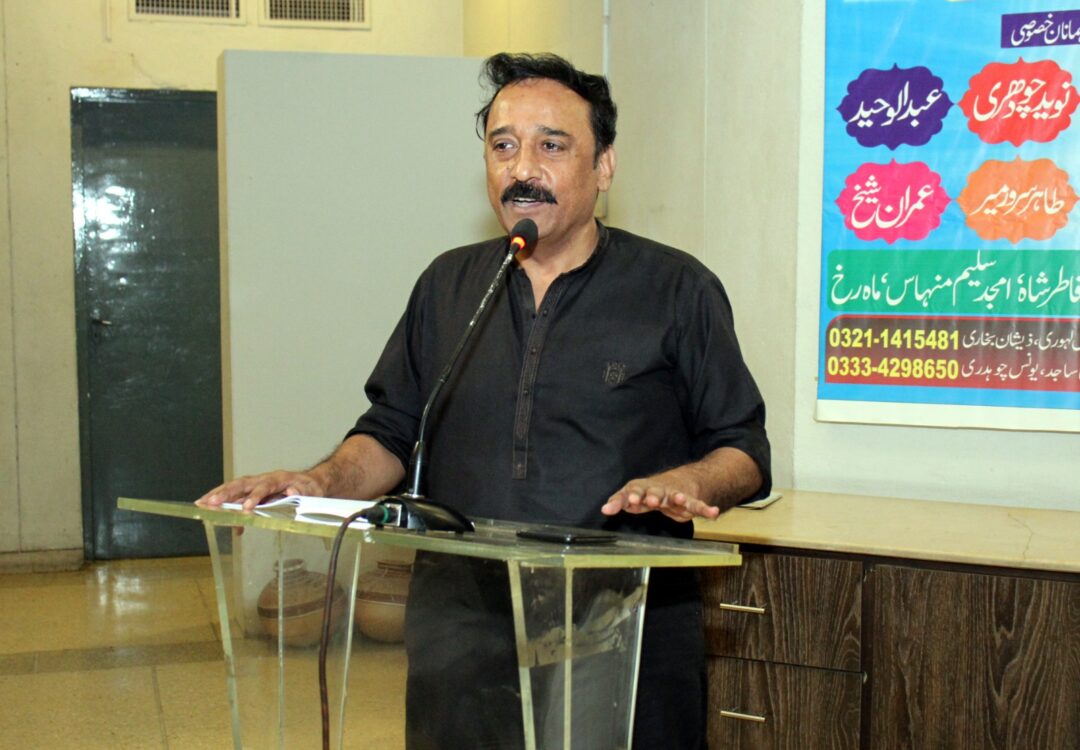
In honor of Lahore’s deep connection to art, culture, and literature, a magnificent building was constructed years ago—the Lahore Arts Council. Recently, its literary hall hosted the launch ceremony of *Kirdar Kashi*, a book of sketches by the renowned journalist, writer, and fiction writer Khwaja Aftab Hassan, in collaboration with Bazm Anjum Romani.
The event was presided over by senior journalist, critic, writer, and columnist Wajahat Masood, with special guest Sajid Yazdani, a veteran showbiz journalist, gracing the occasion. Other distinguished figures honored on stage included Ashraf Sohail, Abdul Waheed, Syeda Deep, ANP Punjab General Secretary Amir Bahadur Khan Hoti, and Lahore Press Club Joint Secretary Imran Sheikh. The proceedings were expertly managed by Bazm Anjum Romani Secretary Dr. M. Abrar.
Among the notable attendees were world-famous Punjabi poet Baba Najmi, Khwaja Aftab Hassan’s wife Tamsila Chishti, daughter Mahrukh, Dr. Kanwal Feroze, Anwar Qamar, Khawar Shah, Saba Mumtaz Bano, Salman Rasool, Arsalan Arshad, Syed Ausaf Haider, Habib Chohan, and Mohsin Ali.
The author, Khwaja Aftab Hassan, illuminated the various stages of writing the book, the characters in his sketches, and the unwavering support of his family in completing his literary works. Expressing gratitude to the Almighty, he said, *”I am blessed with a taste for literature, a flair for expression, and the support of a loving wife and friends who have guided me to my destination.”* He added, *”I have never encountered anyone who held me back; instead, everyone I met encouraged me to move forward. Their encouragement has enabled me to write four books, and Insha’Allah, I will present another to readers this year.”
When Wajahat Masood took the microphone, the gathering turned into a festival of wit and humor. He remarked, “If the author’s background is journalism, perhaps the book should have been titled Kirdar Kushi (Character Assassination) instead of *Kirdar Kashi (Character Sketch), given how deeply this trait is associated with today’s journalists.” He praised Aftab Hassan as a *”beautiful person of his era, not just in appearance but also in his writing.” Masood further noted, “While sketches and humor aren’t inherently linked, Aftab Hassan’s sketches open new avenues of thought. The way he portrays his friends makes me wish he’d sketch me in his next book.”
Special guest Sajid Yazdani highlighted the challenges of satire, stating, “Satire is a difficult genre—our society rarely tolerates it, often responding with hostility. Writing satire is tough, but humor is even trickier. A satirist grows through writing, yet their work is hard for many to digest.” He expressed relief that he was not a target in Aftab Hassan’s book.
Abdul Waheed, in his review, described Kirdar Kashi* as “a literary creation brimming with public interest.” Imran Hussain Sheikh commended Aftab Hassan’s courage in writing sketches about Press Club friends “without hurting anyone’s feelings—a rare feat in this digital age.”
Amir Bahadur Khan Hoti, ANP Punjab General Secretary, spoke fondly of his long association with Aftab Hassan, calling him “the sun of journalism and now of fiction and sketching.” He praised the book for “criticizing without malice, offering a beacon for future generations.”
Ashraf Sohail remarked, “In this era of social media, writing and publishing a book is a form of jihad.” He lauded Aftab Hassan’s ability to reveal hidden facets of personalities through “character assassination wrapped in humor, sting, and spirituality—a complete 144-page package, each page as vibrant as a watermelon.”
Amjad Saleem Minhas noted that “Aftab Hassan’s sketches capture the essence of real Lahore, with every sentence carrying weight.” Fatir Shah praised his contributions to journalism and literature, stating, “Just as a good poem needs rhyme, good prose needs strong sentences—Aftab Hassan never bores his readers.”
Rubina Jilani delivered an insightful English essay on the evolution of Urdu sketching, calling Aftab Hassan “a breath of fresh air in contemporary satire, blending humor with freedom of expression—a remedy for depression in troubled minds.”
Aftab Javed hailed Kirdar Kashi as “literature’s finest reflective book,” praying for the strengthening of the author’s pen.
The ceremony concluded with a heartfelt tribute from the author’s daughter, Mahrukh, who expressed pride in her father’s literary journey and gratitude for the attendees’ love and support.
At Baba Najmi’s suggestion, a minute of silence was observed for the innocent Punjabi laborers tragically killed in Zob simply for their ethnicity. Amid a light drizzle, the beautiful event came to a close, with guests enjoying tea and biscuits—a fitting end to an evening celebrating literature, humor, and camaraderie.