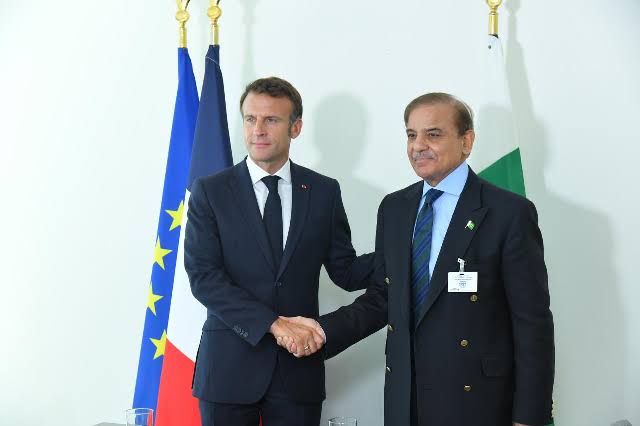
 The involvement of global powers in Pakistan-India tensions is nothing new. But whenever France openly supports India on international platforms, a persistent question arises: what grievance does a distant European country hold that it consistently leans in favor of India, often at Pakistan’s expense?
To answer this, we must revisit a lesser-known yet significant episode from history. The year was 1958. Algeria was then a French colony, and its struggle for independence was at its peak. Ferhat Abbas, the President of the Provisional Government of the Republic of Algeria, sought to address the United Nations to present his nation’s case before the world. France, however, blocked this attempt by asserting that Algeria was its internal matter and that Ferhat Abbas, being a French citizen, had no right to speak at an international forum.
France even pressured the United States to deny Abbas a visa. At this critical juncture, Pakistan took a bold and principled stand. The Government of Pakistan issued a Pakistani passport to Ferhat Abbas, allowing him to attend the UN General Assembly as a Pakistani citizen. There, he delivered a powerful and historic speech that exposed the brutality of French colonialism in Algeria to the global community.
Pakistan’s support for Algeria was not symbolic; it was part of a clear and values-driven foreign policy. In fact, Pakistan was among the first countries to officially recognize the Provisional Government of Algeria in exile in 1958. Islamabad not only extended diplomatic passports to Algerian leaders but also allowed them to open a mission in Karachi. These actions highlighted Pakistan’s firm commitment to the right of self-determination and solidarity with Muslim nations seeking independence.
However, many observers believe France never forgave Pakistan for this bold defiance. It’s argued that France internalized this act of moral diplomacy as a lasting affront. Consequently, France’s later policy choices often tilted against Pakistan, particularly in international affairs.
In recent years, India and France have significantly deepened their strategic partnership. From the Rafale fighter jet deal to joint naval exercises, defense cooperation, and unwavering support at international forums, the Indo-French bond has visibly strengthened. While foreign policy is often interest-driven, Pakistan naturally views this alignment with unease.
Nevertheless, the global landscape has evolved. Modern diplomacy is no longer confined to military cooperation or historical grudges. Today, areas like economic collaboration, environmental sustainability, education, and technology offer new opportunities for engagement.
It is imperative that both Pakistan and France move beyond the shadows of history and build a relationship rooted in mutual respect and forward-looking interests. Pakistan must broaden its diplomatic outreach, and France too must recognize that old grievances should not dictate contemporary diplomacy. The time has come for both nations to focus not on past wounds, but on future possibilities.