


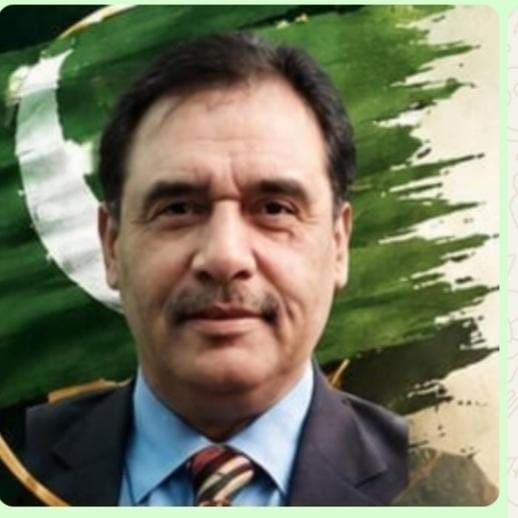
By Dr. Raja Zahid Khan, Defense and Strategic Analyst
Pakistan’s diplomatic history is often narrated through the lens of wars, crises, and deterrence. Yet an equally important and strategically enduring dimension is Pakistan’s role as a peace-building state, repeatedly acting as a force of restraint, mediation, and stabilization during some of the world’s most dangerous confrontations. The recent diplomatic initiative in facilitating de-escalation between Iran and the United States is not an isolated episode; rather, it is the continuation of a long strategic tradition in which Pakistan has blended credible defense preparedness with mature diplomacy.
From the Cold War rivalry between Washington and Moscow to the present tensions among the United States, China, the Islamic world, South Asia, and the Middle East, Pakistan has consistently used its geopolitical location, military credibility, and diplomatic access to prevent conflicts from widening into catastrophic wars.
The roots of this doctrine can be traced to the Cold War era, when Pakistan emerged as one of the few states capable of maintaining channels across competing ideological blocs. While formally aligned with the Western alliance system through SEATO (1954) and CENTO (1955), Pakistan simultaneously developed strategic trust with China after the 1963 border agreement. This unique position allowed Islamabad to play one of the most consequential diplomatic roles of the twentieth century: facilitating the secret US-China rapprochement in 1971, when President Yahya Khan’s government enabled Henry Kissinger’s covert visit to Beijing in July 1971. That initiative paved the way for President Nixon’s historic 1972 visit and helped soften one of the most dangerous Cold War divides.
Pakistan demonstrated again after the 1965 war with India, when it joined the Tashkent Declaration on 10 January 1966, converting military confrontation into diplomatic normalization. Following the traumatic events of 1971, Pakistan once more chose peace through the Simla Agreement of 2 July 1972, reinforcing the principle that even deeply contested disputes require structured dialogue. This philosophy matured further in the Lahore Declaration of 21 February 1999, where Pakistan and India introduced nuclear confidence-building measures despite the region’s recent atomicization.
The end phase of the Cold War offered another defining example. Pakistan played a key diplomatic role in the Geneva Accords of 14 April 1988, which facilitated the Soviet withdrawal from Afghanistan. Following the disintegration of the USSR in December 1991, Islamabad’s diplomacy focused on preventing strategic vacuum, refugee spillover, militancy, and regional fragmentation. Its later support for the Bonn Process in December 2001 further underscored Pakistan’s preference for negotiated state reconstruction over prolonged chaos.
The post-9/11 era, frequently described in ideological terms as a clash of civilizations, further elevated Pakistan’s role as a bridge between the Islamic world and the West. Pakistan remained one of the few states capable of simultaneously engaging Washington, Beijing, Riyadh, Tehran, Ankara, Kabul, and other capitals. Its support for the Doha peace process (2018–2020) and facilitation of dialogue related to the Afghan transition reflected a consistent doctrine: crises rooted in identity, religion, or ideology can only be sustainably addressed through political engagement rather than civilizational polarization.
The same strategic logic applies to the growing tensions between the United States and China, as well as the broader contest between capitalist and post-communist economic blocs. Pakistan has carefully avoided zero-sum alignment. Through CPEC since 2015, it deepened economic cooperation with China, while preserving functional engagement with Washington and Western institutions. This balancing posture is a modern continuation of Pakistan’s historical role as a stabilizing middle power that seeks coexistence rather than bloc confrontation.
In the Middle East, Pakistan has similarly pursued a doctrine of principled restraint. During the Yemen crisis (2015), the Qatar-GCC dispute (2017), and recurring Iran-US escalations, Islamabad deliberately avoided sectarian entanglement while advocating de-escalation, sovereignty, maritime security, and energy stability. Such diplomacy reflects Pakistan’s understanding that regional wars in the Gulf inevitably carry direct consequences for South Asia’s economic and strategic environment.
In South Asia, the rise of Hindutva-driven strategic assertiveness after 2014 has sharpened regional polarization. Pakistan’s response, however, has largely emphasized international law, ceasefire stability, and strategic restraint, culminating in the 25 February 2021 reaffirmation of the India-Pakistan ceasefire. This reaffirmed Islamabad’s long-standing belief that durable peace in a nuclearized environment requires disciplined statecraft rather than escalatory nationalism.
A particularly important contemporary dimension of this doctrine is the leadership role of Field Marshal General Asim Munir, whose strategic outlook has strengthened the integration of military preparedness with diplomatic maturity. Under his leadership, Pakistan’s military diplomacy has increasingly supported de-escalation through border stabilization, strategic communication, and calibrated back-channel engagement in relation to Afghanistan, Iran, Gulf security, and South Asian crisis management.
Field Marshal Asim Munir’s significance lies in reinforcing a distinctly modern Pakistani strategic principle: peace is not the absence of strength, but the product of credible strength exercised with restraint. His leadership reflects a doctrine where defense capability enables diplomacy, and diplomacy multiplies national security.
Pakistan’s diplomatic journey across the Cold War, Soviet collapse, ideological conflicts, Islamic-Western tensions, India-Pakistan crises, and present US-China competition reveals a remarkably consistent philosophy: peace through preparedness, deterrence through credibility, and stability through dialogue.
At a time when the international order is again marked by East-West suspicion, civilizational anxieties, Middle Eastern instability, and South Asian ideological polarization, Pakistan’s historical experience offers an important lesson. Middle powers can play transformative roles when they combine military credibility, diplomatic access, and strategic patience.
Pakistan’s peace diplomacy, therefore, should not be seen as episodic. It is a defensive national doctrine of statecraft, rooted in realism, restraint, and responsibility—one that continues to shape the country’s role as a stabilizing force between conflict and peace.
(The writer is a defense and strategic analyst focusing on regional security, military diplomacy, and geopolitical affairs)

https://shorturl.fm/yi72Q
https://shorturl.fm/OqdmY