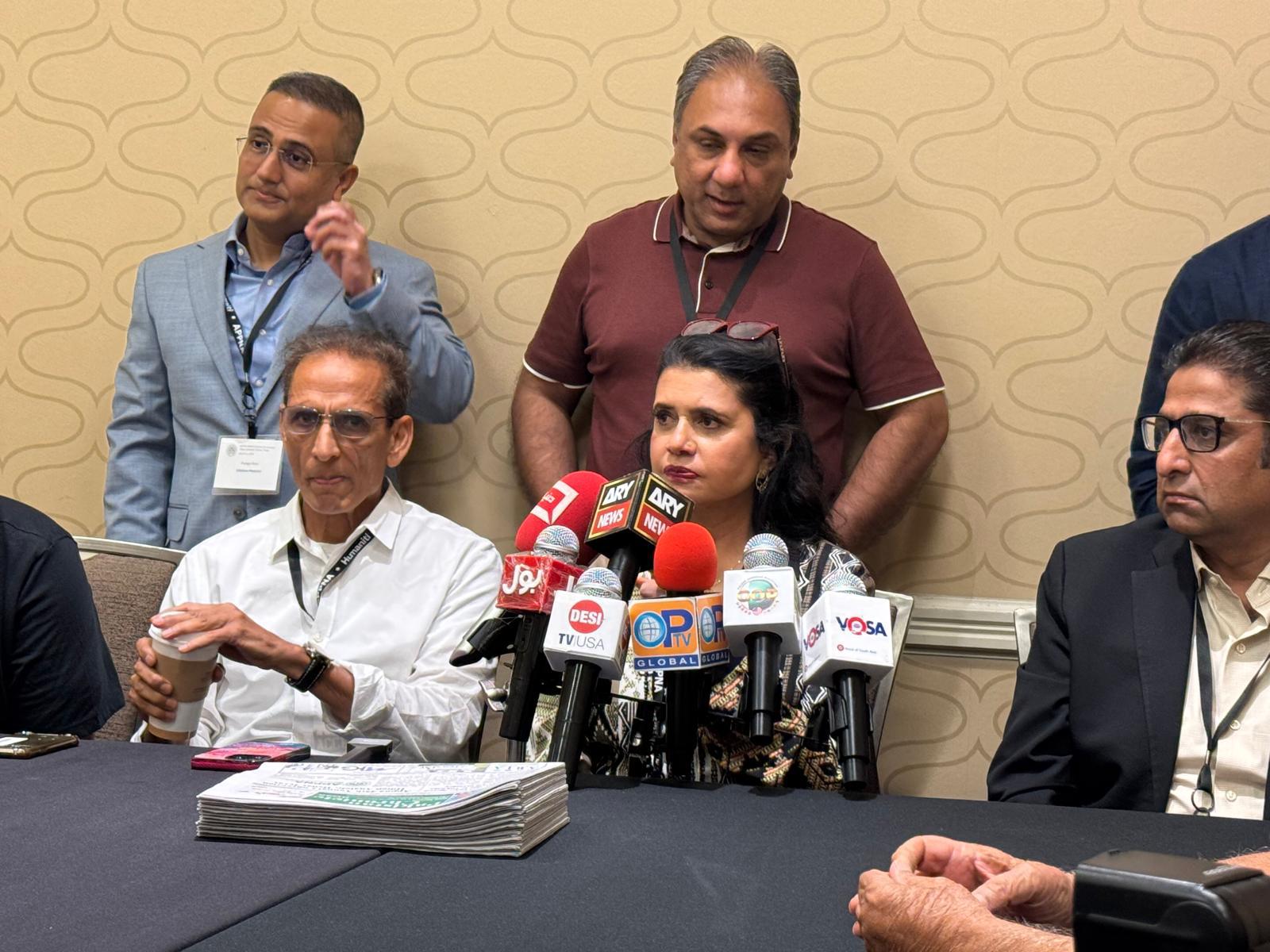
Dr. Humera Qamar the President , APPANA held a press briefing along with President elect , Dr Babar Rao , Dr Naeem Tahirkheli , Dr Tariq , Dr Snaullah, Dr Fazal Akbar Ali and Dr Saqab, , Dr Furqan . She said that this convention has commenced, and we will be here until the 13th. I would like to briefly introduce them. Mr. Waqar is present here in America. I had met some individuals earlier. APPNA is a first-class professional organization of physicians practicing in the USA and Canada. I am from Pakistan. Regarding some of our members: we attended medical school in Pakistan. We have strong connections to Pakistan, and we came here. We are now living our lives here.
Additionally, there are second-generation members are like my own children who were born and raised here. Furthermore, we have third-generation Pakistani descendants present, who maintain ties to Pakistan through their grandparents.
If you remember just one thing from this press conference, let it be our core pillars are social welfare projects, advocacy, and support for young physicians. My request to you all is to convey this message to everyone.
Now, I will elaborate on these initiatives


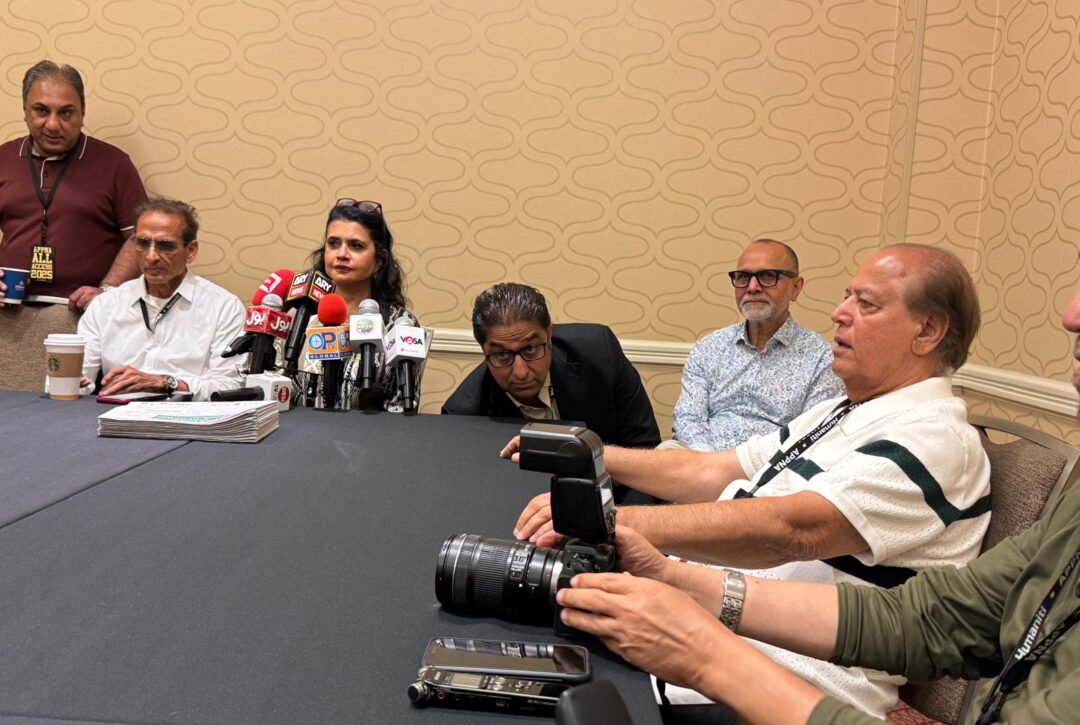


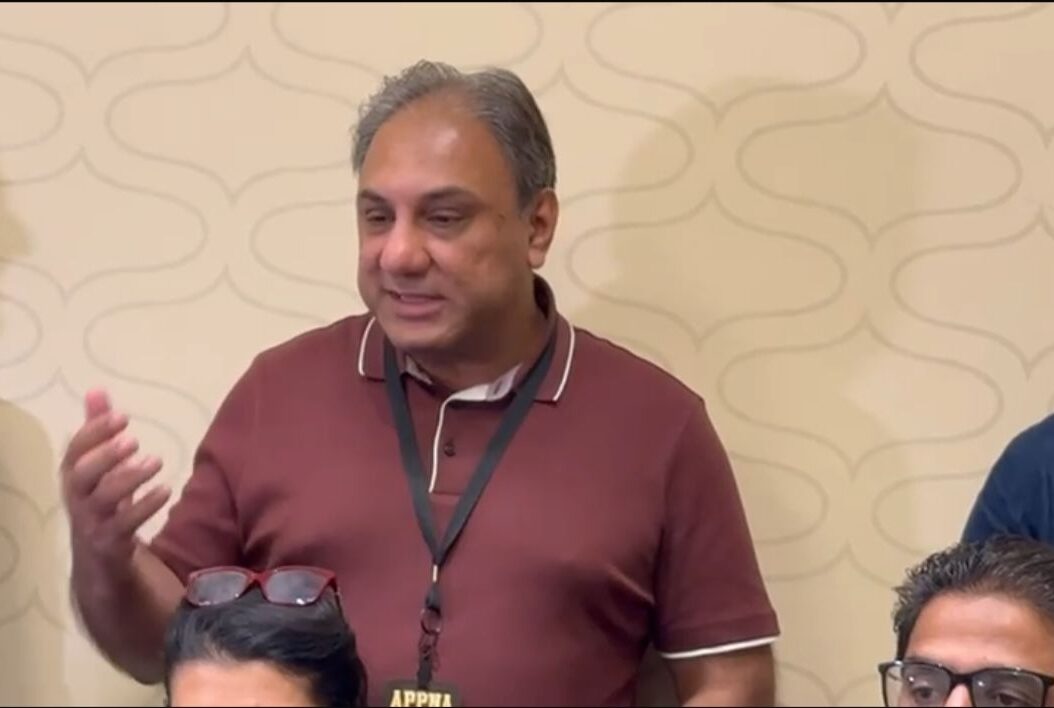


APPNA physicians represent both academic medicine and private practices. We aim to combine the collective expertise of all physicians and share this knowledge with medical professionals in Pakistan whether medical students, residents, fellows, or attending physicians.
She further added that APPNA spearheads social welfare projects empowering local communities across the USA, Canada, and Pakistan. In Pakistan specifically, we maintain long-standing partnerships with numerous NGOs. This year alone, I have signed Memorandum of Understanding (MOUs) with several Pakistani NGOs – details of which I will share later.
Advocacy constitutes our third pillar. We actively engage U.S. lawmakers at all levels from county commissioners to state legislators to protect physicians’ rights she added .
She further said that a core priority is supporting young physicians. When medical students complete their education, APPNA provides critical guidance. I am proud to note that APPNA is universally recognized across Pakistan. Here in North America, we assist approximately 600-800 Pakistani physicians annually.
She disclosed that through our Young Physicians Committee, we foster connections via social media platforms, including a dedicated Facebook group with roughly 16,000 members. This network creates opportunities: whether remotely or in person, young physicians secure internships/externships. Experienced APPNA members mentor them, providing hands-on training in residency applications.
The third phase of our program provides externships, internships, and recommendation letters for residency applications. Our medical graduates are exceptionally bright – their strong resumes consistently secure interviews and placements. This year, I’m proud to report 1,050 young physicians secured residencies, marking our highest success rate ever. Pakistan now ranks as the second-largest source of international medical graduates in the U.S. after India ,a remarkable achievement given India’s significantly larger population.
Post-placement, we assist with visa processing. For those requiring J1 visas (the primary category for Pakistani residents), we ensure timely approvals so they can join programs by the mandatory July 1 start date. Despite recent U.S. government restrictions on J1 visas – including suspensions that particularly impacted rural healthcare providers – our advocacy efforts prevailed. Through persistent engagement with the State Department and lawmakers, 99% of our candidates received visas and commenced residencies on time.
She also shared details about 48th Annual Convention and introduced her team ,
Dr. Muhammad Tariq serves as Host Committee Chair ,Dr. Saakin and Dr. Fazal Akbar Ali are Co-Chairs,Dr. Falak Saeed (present here) and other committee members too, Dr. Sanaullah Secretary),
Dr. Babur Rao (President-Elect for 2026) and Dr. Naeem Tahar Kheli (instrumental supporter)
Today marks the convention’s second day, featuring continuous Medical Education sessions, Social Welfare Project discussions with special focus on Pakistan initiatives , strategy meetings to advance our core mission and we appreciate your media partnership in amplifying these efforts,m.
She also shared details of their efforts annual initiatives in Pakistan. She said that we maintain ongoing projects in Mirpur and Thar. Each year, we execute our cornea transplantation program, through which corneas harvested internationally at $300 per unit are delivered to Pakistan. These enable sight-restoring procedures that cure blindness. Through dedicated fundraising efforts, we typically provide 300-500 corneas annually – restoring vision for approximately 500 individuals each year.
This year, we aim to expand this initiative to 1,000 corneas. Concurrently, we’re promoting education about cornea donation within Pakistan. While cultural resistance to organ transplantation persists, we remain committed to advancing this cause, Insha’Allah.
Shifting focus to our convention: Today’s program commenced with four hours of lectures delivered by leading specialists in their respective fields. Attendance is essential for all physicians, as these sessions provide Continuing Medical Education (CME) credits required for license maintenance.
Both our member physicians and the public have demonstrated exceptional interest in these sessions. Additional specialized lectures include:
We carry out our annual initiatives in Pakistan by partnering with four to five pre-identified NGOs. This ensures funds are properly channeled and projects executed as intended. This year, we adopted Bhirpur Village and implemented water filtration and cleanliness projects in Thar, funded through our collective efforts. Additional initiatives were coordinated through Sillani.
Our annual cornea transplantation project involves corneas harvested internationally at $300 per unit, which are then sent to Pakistan for sight-restoring procedures. Through regular fundraising, we typically provide 300-500 corneas annually – restoring vision for approximately 500 people. This year, we aim to expand this to 1,000 corneas while promoting cornea donation education in Pakistan. We continue working to address cultural resistance to organ transplantation, Insha’Allah.
specialized medical track.
My lifelong passions have always been charity, social welfare, and education. Beyond these commitments, while this convention may appear to be just another meeting, tremendous work happens behind the scenes. For this, I extend immense appreciation to our entire team – their tireless dedication makes everything possible.

A particularly valuable point raised by Brother Tariq is our intentional engagement with political figures and community leaders. We actively invite governors, U.S. senators, state senators, and representatives to our events. This serves a dual purpose: strengthening our advocacy efforts while demonstrating our educational initiatives firsthand.
As you may have observed at APPNA gatherings, many dignitaries regularly attend. This reflects our core objective: to showcase our community’s work to these stakeholders while aligning our values with theirs at a fundamental level.
APPNA represents physicians of Pakistani origin across North America, encompassing the United States and Canada. Our active membership includes approximately 3,700 physicians, with nearly 3,700 dues-paying members – substantial figures reflecting our reach.
We maintain 38 regional chapters throughout U.S. states, with some states hosting multiple chapters. Additionally, 18 alumni chapters represent Pakistani medical colleges, demonstrating our extensive presence.
The organization operates through committees that manage grassroots initiatives like residency programs. Governance rests with the Board of Directors, chaired by current President Dr. Amer, with Dr. Babar Rao serving as Secretary and Dr. Asim Mehmood as President-Elect (succeeding next term). Four additional directors complete the Board, which serves as the primary decision-making body. All committees report directly to this Board.
Each major meeting, including our flagship Summer Convention, operates under an independent Host Committee. Dr. Muhammad Tariq chairs the current Dallas convention, following Dr. Fazal Akbar Ali’s leadership at the Spring Meeting. These committees function autonomously with minimal Board interference in daily operations.
Our governance structure ensures both strategic oversight and operational flexibility for our initiatives across North America and Pakistan.
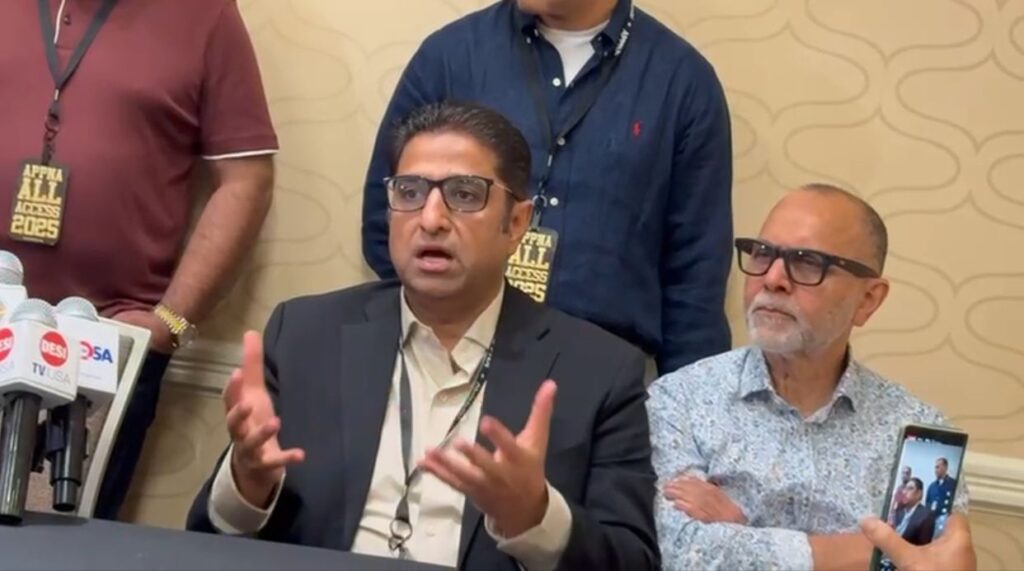
Organizing this convention required eight to nine months of intensive preparation. We conducted numerous meetings to coordinate vendors, entertainment logistics, and committee assignments. Each committee received clear responsibilities to ensure smooth execution and absolute transparency at every stage. This complex process demanded strict conflict-of-interest protocols and immense volunteer dedication.
Our physicians contribute significant time from their demanding professional lives to make these initiatives possible. We take profound pride in this work and deeply value the platform APPNA provides for meaningful service.
I remain particularly concerned about rising Islamophobia. While some political developments appear positive, many politicians still engage with Muslim communities superficially rather than through substantive partnership. APPNA must lead with concrete projects to counter this trend.
Beyond the visible festivities – the music and food – lies our core purpose. Significant charity work unfolds quietly in Pakistan, including funding an Emergency Room construction and advancing healthcare infrastructure projects. These vital efforts remain unseen by convention attendees but continue through dedicated action.
Every individual here contributes meaningfully to this collective mission. While people enjoy the celebrations, remember that we simultaneously drive transformative projects in Pakistan – building healthcare access where it matters most.
I believe two things hold profound importance. First is our enduring connection to Pakistan – a place constantly remembered. Those living there dream of coming to America, while those who’ve settled here yearn to return. This persistent longing inspires us to recreate a “mini-Pakistan” during our conventions. For three or four days, we gather with friends to relive hostel memories. Middle-aged attendees become young again, reminiscing like eighteen-year-olds. This nostalgia forms an essential part of our identity.
Second, we create this space for our children raised in Western culture. Though they learn American traditions in schools and adopt local lifestyles, here they discover peers who share their heritage. Brown-skinned children converse in Urdu, swap stories of visiting Pakistan, and bond over shared experiences. They witness our Pakistani ethos firsthand – Islamic traditions, cultural attire, and folk singers performing native songs. These elements, deeply missed abroad, anchor them to their roots.
We cherish rituals often taken for granted back home: attending Eid prayers in congregation, hearing the azan echo through halls, and joining communal worship. What seems ordinary in Pakistan becomes sacred here.
In recreating Pakistan, we embrace its full spectrum – both beautiful traditions and human complexities. Joyful reunions unfold alongside spirited debates, mirroring the vibrant tapestry of community life back home. Every facet, from laughter to occasional disagreements, finds expression in this shared space. 
Thank you all for being here – your presence is deeply valued. While our work continues beyond this convention, it’s equally vital to demonstrate our initiatives in Pakistan. We must ensure our communities there witness both our efforts here and the impact we strive to achieve back home.