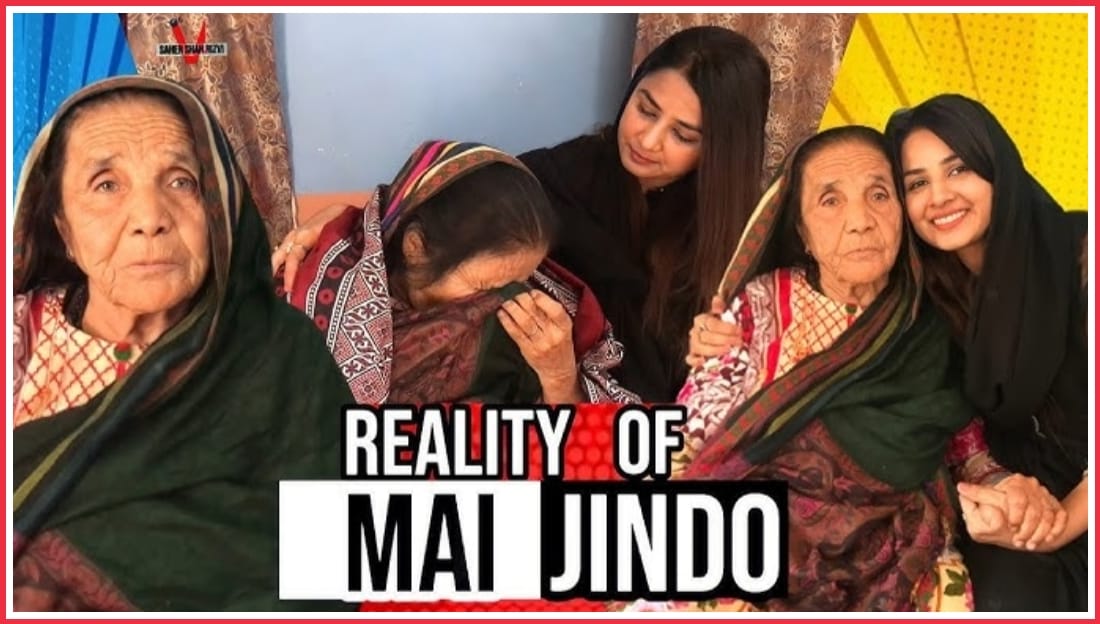
 The world is full of resistant figures, and among them is an eternal resistant character, Mai Jindo, the mother of Sindh, who played a resistant role in the pursuit of justice, which is still etched on the heart of every young person, sister, and daughter in Sindh today. She achieved justice through resistance.
Mai Jindo’s name is written in Sindh’s history of resistance like few other immortal names. She was not a political leader or the head of any party, but a simple village woman who, in her pain and quest for justice, challenged the entire system. During the harsh era of Martial Law, when everyone was being suppressed, Mai Jindo raised her voice for the innocence of her two young sons. Mai Jindo’s case was not just about her two sons; it became a symbol of self-realization and political awakening for the entire Sindhi nation.
Mai Jindo is an immensely brave woman from Sindh’s Tando Bahaul district (near Hyderabad) who raised her voice against the treacherous and illegal injustices inflicted upon oppressed peasants. Her struggle, particularly the incident of June 5, 1992, and her subsequent quest for justice, is unparalleled in Sindh’s history.
In the 1990s, many rural areas of Sindh saw peasants, haris (landless tenants), and small landowners facing land disputes, allegations of collaboration with Muhajir or Afghan laborers, and involvement of militant elements. In such circumstances, a military operation took place on June 5, 1992, in a village of Tando Bahaul, which led to large-scale atrocities against the peasants.
On that day, military personnel and police vehicles entered the village, and several laborers, haris, and peasants were abducted. Among them were Mai Jindo’s sons, Bahadur and Manthar; her son-in-law, Haji Akram, was also injured. These individuals were taken to the banks of the Indus River and shot dead. Military authorities later attempted to label them as terrorists.
When military personnel entered her village and arrested the young men, Mai Jindo gathered all the villagers and said that if we tolerate this oppression, we will have to endure even more injustices in the future, and who knows how many more young men we will lose. Her spoken words later evolved into an organized movement.
After this injustice, Mai Jindo did not sit idly by; she took action. Mai Jindo’s struggle gave courage to many women, several of whom joined human rights organizations and political freedom movements.
Mai Jindo was not just a mother but a complete history in herself—a woman who transformed her pain into a movement and her grief into protest. Mai Jindo did not belong to a wealthy family, nor was she literate, but her courage and truth were her greatest weapons. Her historic words were: “I don’t want justice in this world, I just want the truth to be acknowledged.”
Mai Jindo, a poor mother living in the village of Tando Bahaul in Sindh, whose two sons were arrested on charges of rebellion, tortured, and martyred, saw this not just as a mother’s pain but as the beginning of raising a voice against tyranny. Mai Jindo was completely illiterate, but she kept speaking the truth before Pakistan’s courts, journalists, and human rights organizations. For years, she knocked on the doors of courts in Karachi, Hyderabad, and Islamabad. When anyone told her, “Enough now, sit down and be quiet,” her response was: “My tears will not dry until I find my sons’ killers.” She demanded justice through courts, media, and public protests. Her two daughters, Hakeemzadi and Zeeb-un-Nisa, self-immolated on September 11, 1996, in protest against the delays in the justice process. Due to pressure, a court-martial was ordered against military officer Major Arshad Jamil.
On October 29, 1992, he was sentenced to death, and 13 soldiers were sentenced to life imprisonment, but the implementation of the sentences was delayed.
Finally, on October 28, 1996, the sentence was carried out, which was a monumental moment for Mai Jindo.
Mai Jindo’s story is not just a battle for justice; it is a voice against Sindh’s social structure, the struggles of rural women, and the plight of the agricultural class. She proved that an oppressed woman can also resist, raise the voice of truth against tyranny, and, rising above her self, incorporate the deprivations of her nation into her struggle.
Today, when issues like exploitation in society, agricultural disputes, the deprivation of women, and judicial delays have not diminished, Mai Jindo’s story reminds us that justice is not merely a matter of acquiring power but the name of persistent struggle. A woman is not just a domestic figure; she is also responsible for the public sphere. The voice of oppressed classes cannot be silenced by suppression.
Mai Jindo did not learn to keep her personal trauma (the martyrdom of her sons, the self-immolation of her daughters) to herself; instead, she transformed it into a collective struggle for justice. Her life teaches us that “when the slogan of truth is raised, the one who raises their voice might be alone, but they become the beginning of social change.”
Time passed, but Mai Jindo never remembered her memories by crying over them. Instead, she would say at every gathering, “My sons were martyred, but I have kept them alive in the field of justice.”