
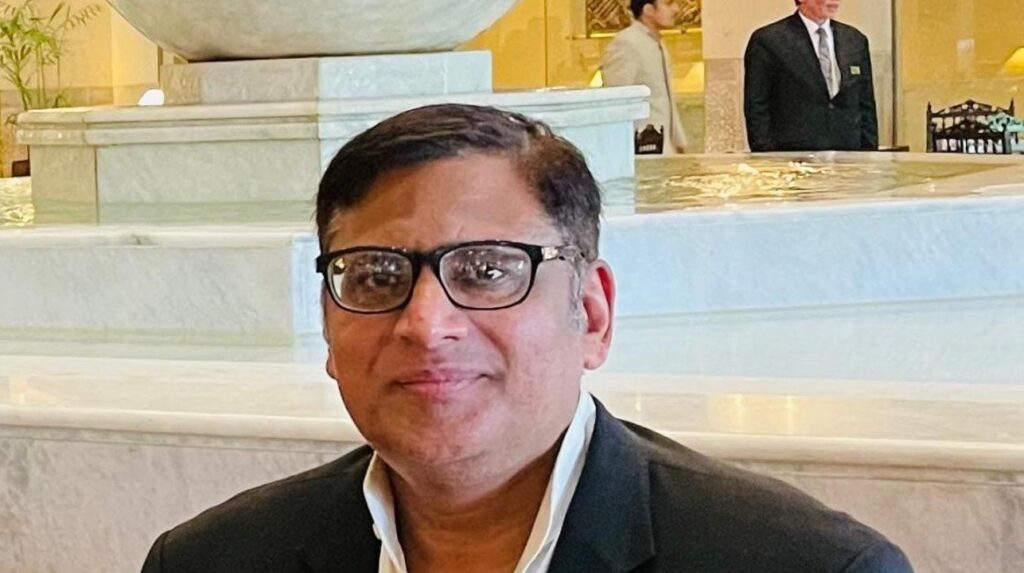

Former Director of Mega Scandals & Recovery, National Accountability Bureau (NAB), Pakistan
The recent Israeli strike on Doha was not merely a military operation; it was a direct assault on the sovereignty of a brotherly Muslim state and, more profoundly, an affront to the dignity and collective honor of the entire Muslim world. This was not just an attack on Qatar—it was a calculated message from Israel and its backers to demonstrate that Muslims, despite their vast resources, remain divided and thus vulnerable.
Today, the streets of *Doha* are draped in grief. Funerals are being carried out, the wounded are fighting for their lives, and Qatar’s leadership is appealing to the conscience of the international community. Yet the pressing question remains: how long will the Muslim world continue to rely on words of condemnation alone? Saudi Arabia, Turkey, Iran, and other nations have issued strong statements, but Israel knows all too well that after a few days of outrage, silence often prevails. This is precisely why it dares to repeat its aggression time and again.
This attack occurred at a sensitive moment—when Qatar was engaged in shuttle diplomacy to secure the release of Palestinian prisoners and to push for a lasting ceasefire. By targeting Doha, Israel trampled on those efforts and sent a blunt message: peace has no place in its calculus until the Palestinians are completely subjugated. This was not simply a strike on Qatari soil; it was a strike at the very heart of the Muslim Ummah.
In my assessment, the Muslim world now stands at a decisive crossroads. One path is the familiar one—passing resolutions, convening emergency meetings, issuing press releases, and then slipping back into silence. The other, more urgent path is to forge practical unity, establish a joint defense posture, and send an unmistakable signal to Israel: an attack on one Muslim state will be treated as an attack on all.
Pakistan has already expressed solidarity with Qatar, and the Prime Minister has taken the right step by raising this matter on global forums. But I firmly believe Pakistan must go beyond statements. Ours is the only Muslim country with nuclear capability, a robust and professional military, and the global stature required to lead. If Pakistan assumes this role, the rest of the Muslim world will rally behind it like an unshakable wall.
My recommendations are clear:
* Pakistan should immediately propose a high-level summit of Muslim leaders, with the explicit aim of crafting a unified strategy—not just words.
* On both military and diplomatic fronts, Pakistan must emphasize that any violation of a Muslim state’s sovereignty will invite a collective response.
* At the spiritual and public level, Pakistan must project leadership—conveying to the world that Muslims are not bound by mere rhetoric, but are ready to act for the defense of the Ummah.
The attack on Doha is a wake-up call. If we remain silent today, tomorrow another Muslim capital may face the same fate. Israel has long crossed the boundaries of state terrorism, and it can no longer be confronted with condemnations alone. It requires resolute, coordinated, and decisive action.
This is the moment for Pakistan to rise—to lead, to unify, and to prove that the Muslim world, when standing together, is an indomitable force.



Leave a Reply