
By Ijaz Ahmad Khan
TORONTO: As dawn breaks over the Gomal Valley in southern Pakistan, 55-year-old fisherman Asghar Ali steers his old wooden boat into the deep currents of the Indus River to earn his daily bread.
For Asghar, the mighty river is not merely a water channel—it is the backbone of his family’s survival since 2002, when his father passed away. For centuries, this river has nourished life from Gilgit-Baltistan down through Khyber Pakhtunkhwa, Punjab and Sindh.
For years, Asghar and his brother have sailed the Indus, dropping nets and studying the patterns of a river that has defined the lives of countless generations.
Lately, however, he says the river’s natural rhythm has started shifting, hit by climate change and India’s alleged violations of the Indus Waters Treaty since April last year.
Standing at the edge of his boat near Darya Khan, he gestures toward the wide stretch of water near Dera Ismail Khan and remembers when sightings of the threatened Indus River Dolphin were far more frequent.
“The dolphin’s existence is tied to the steady flow of the river,” he explains. “When water levels remain stable, the river produces more fish and builds a healthier habitat for Mahseer, Rohu and dolphins. But when the flow drops, the whole ecosystem takes a hit.”
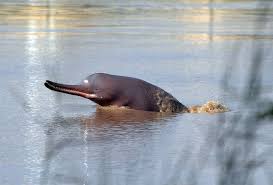
The Indus River dolphin ranks among the world’s scarcest freshwater mammals. Native mainly to Pakistan’s Indus basin, this blind species is finely tuned to muddy waters and depends on strong river currents for feeding, reproduction and migration.
“India’s violations of the IWT have pushed the Indus dolphin population into greater danger,” said Muhammad Zubair, Director Fisheries KP, speaking to this correspondent. He stressed that a steady supply of freshwater for breeding is vital for the survival of this rare mammal.
Zubair noted that the Indus dolphin is one of the planet’s rarest mammals, concentrated largely in southern Pakistan, and ranks as the second most endangered freshwater species globally.
Still, the species’ numbers have steadily dropped because of pollution, illegal hunting, habitat breaks caused by barrages, and dolphins getting trapped in irrigation canals.
He added that India’s breach of the treaty has further jeopardized the Indus dolphin. Roughly 2,000 of these animals now survive in just a small portion of their historic range—the lower Indus in Pakistan.
In the past, dolphins traveled freely across nearly 3,500 km of the Indus system, from the estuary through the plains to the Karakoram foothills.
The biggest concentration, found at very high density, lies between Guddu and Sukkur barrages in Sindh. Smaller groups exist in Punjab and Dera Ismail Khan, KP.
Zubair warned that India’s unauthorized dam construction on western rivers is intensifying threats to the Indus dolphin’s future.
He cautioned that any cut in water supply can trigger serious damage—splitting habitats, isolating dolphin groups, shrinking fish stocks, and raising the odds of dolphins stranding in canals or shallow pools.
“India’s IWT breaches amount to an attack on aquatic and livestock resources,” said Naveed Farooq Khan from Abdul Wali Khan University Mardan.
He claimed India has undermined the integrity of international treaties and bilateral ties after putting the IWT on hold, and said the Modi administration must be held responsible for these unilateral moves.
He cautioned that a prolonged suspension of the treaty could endanger peace in South Asia, especially with water conflicts between two nuclear states.
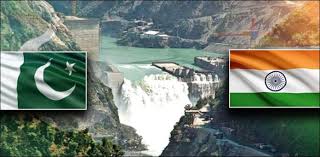
Signed under World Bank mediation in 1960, the IWT gave Pakistan rights over the western rivers—Indus, Jhelum and Chenab—while India retained control of the eastern rivers: Ravi, Beas and Sutlej.
Naveed Farooq Khan accused India of serious treaty violations by altering Chenab’s water flow last December without informing Pakistan, as the agreement demands.
“Sudden changes in water discharge are highly alarming for Pakistan and suggest India is releasing water on its own,” he stated.
Such actions, he said, threaten Pakistan’s farming sector, food security and the income of millions, in addition to endangering the Indus dolphin.
He called India’s moves “water weaponization,” noting that Pakistan has repeatedly flagged the issue at international forums.
Pakistan’s Indus Water Commissioner has officially demanded an explanation from his Indian counterpart over these breaches.
Pakistan expects India to avoid unilateral steps and honor all treaty terms fully, following the landmark verdict by the International Court of Arbitration in The Hague.
India, he argued, lost its legal position after the Court of Arbitration ruled in Pakistan’s favor.
He further alleged that India has repeatedly weakened the treaty by building projects like Kishenganga and Ratle hydropower plants, which violate IWT terms. He also said the Modi government crippled the treaty’s dispute process by boycotting arbitration and neutral expert hearings.
He warned that limiting water flows could leave millions of Pakistanis facing hunger and financial distress.
Analysts agree that breaking the IWT endangers regional peace and weakens global norms for interstate relations.
Niaz Ali, former Chief Conservator of Forests, stressed that keeping ecological flows in the Indus is crucial to safeguard biodiversity, including the endangered dolphin.
Proper water levels, he said, help maintain wetlands, fisheries and river forests, while protecting one of South Asia’s most distinctive freshwater habitats.
The Indus River dolphin has become a barometer of the river’s health. Its future is directly linked to water quality, making it a key marker of environmental shifts.
Back in Dera Ismail Khan, riverbank communities like Asghar’s view the dolphin issue as more than environmental—it is personal.
Thousands of fishermen, farmers and laborers rely on the Indus. Any change in river conditions hits household earnings, food supply and local markets directly.
Asghar recalls times when fish stocks fell and river channels shrank, making survival tougher for river-dependent families.
“The river is our source of income,” he says. “If the river declines, humans, fish and wildlife all suffer together.”
As dusk falls, Asghar steers his boat back to shore. His catch is small, but his worries go beyond daily earnings. Gazing at the flowing water, he thinks about the river’s future and its most famous inhabitant.
“The dolphin is part of the Indus,” he says. “Saving the river means saving the dolphin—and securing the future of everyone living along its banks.”
For families like Asghar’s and for the endangered Indus River dolphin, the Indus’s health is a question of survival—binding human livelihoods and wildlife protection in one of Pakistan’s most critical river systems.