WHAT’S THE TRUE AGENDA? FROM FLOUR SUBSIDIES TO CONSTITUTIONAL CONTESTATION: THE RISE OF THE JAMMU KASHMIR JOINT AWAMI ACTION COMMITTEE (JAAC), 2023–2026
Introduction
On the surface, it began with the price of flour, the cost of electricity, and the everyday grievances of shopkeepers in a mountain town.
But beneath the slogans about bread and electricity bills, a question now haunts Islamabad and every Pakistani who has watched Kashmir bleed: Whose flag truly flies above this movement?
Why does a charter that begins with demands for subsidies end with demands that challenge the constitutional relationship between Azad Jammu and Kashmir (AJ&K) and Pakistan? Why does the individual most frequently cited as the movement’s intellectual voice live not in Muzaffarabad, but in Glasgow? And why does some of the evidence point toward the influence of a foreign hand—specifically, India?
This is the story of the Jammu Kashmir Joint Awami Action Committee (JAAC) and how a protest that began in the flour markets of Rawalakot evolved into a movement whose rhetoric, demands, and political trajectory increasingly became a subject of national security concern.
JAAC emerged during 2023–2024. Initially presenting itself as a platform for articulating socio-economic grievances, it rapidly evolved from a movement focused on public welfare concerns into a highly organized street-pressure entity.
Over time, however, its methods increasingly relied upon confrontation, sustained agitation, and public pressure campaigns that repeatedly disrupted public order and challenged state authority. This evolution transformed JAAC from a grievance-based advocacy platform into a movement whose activities have increasingly challenged the writ of the state and public order across the region.
The Street Face – Shaukat Nawaz Mir
Every successful insurgency requires two things: an idea and a face. The idea may be developed elsewhere, but the face must emerge from the local population.
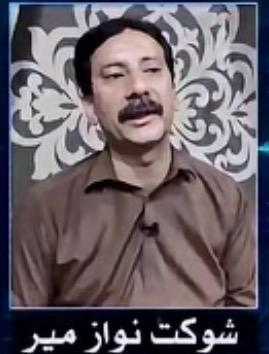
The public face of JAAC is Shaukat Nawaz Mir.
His campaign against the Neelum-Jhelum and Kohala hydropower projects—both flagship federal investments in AJ&K—has been viewed by critics as promoting anti-state rhetoric and creating divisions between AJ&K and the federation.
In August 2023, Mir became a founding member of JAAC. By May 2024, he had emerged as its principal public representative. By October 2025, during a televised press conference at Lal Chowk, Muzaffarabad, he declared that “Azad Kashmir is not free.”
This statement represented more than political rhetoric. Broadcast across Indian television networks and amplified through Indian media platforms, it reinforced perceptions that the movement’s most visible leader was increasingly aligning with narratives promoted by India regarding Kashmir.
The Intellectual Architect – Dr. Amjad Ayub Mirza
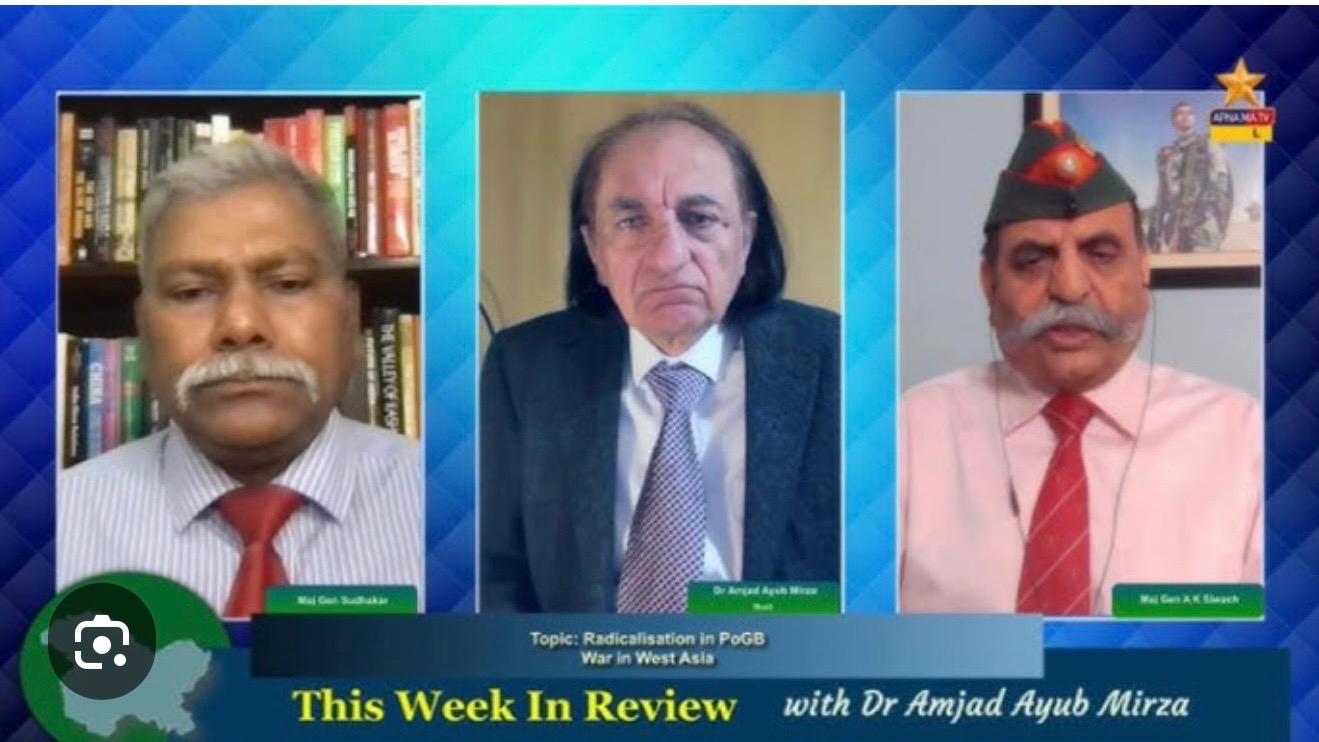
If Shaukat Nawaz Mir is the movement’s public face, then Dr. Amjad Ayub Mirza is widely regarded as one of its principal intellectual influences.
Born in Mirpur, AJ&K, Mirza has lived in the United Kingdom for many years and currently resides in Glasgow, Scotland. The organizational methods employed by JAAC display notable similarities to concepts advanced in his writings regarding “Awami Committees,” or people’s committees, as instruments of sustained public pressure and mass mobilization.
His work Ao Inqalab Karain is a political polemic written in Urdu and directed at the people of AJ&K and Gilgit-Baltistan. Its central argument is that meaningful change cannot be achieved through conventional political processes alone.
The book reframes local grievances—electricity prices, flour subsidies, governance failures, and economic hardship—as symptoms of a broader political relationship between AJ&K and Pakistan. This framework shifts public discourse away from governance reform and toward questions of political status and sovereignty.
Critics argue that this narrative closely mirrors themes that Indian information campaigns have promoted for decades regarding the Kashmir dispute, albeit presented in Urdu and delivered by a Kashmiri voice based in Scotland.
Dr. Mirza’s public statements have further intensified debate regarding his political orientation. Following India’s 2024 general elections, he publicly offered his services to the Government of India. In January 2024, he called for the establishment of a “Government of Pakistan-administered Kashmir in Exile” if JAAC’s demands were not met by 5 February.
In October 2025, during an appearance on Indian television, he described JAAC as “the only legitimate representative of the people’s will in Pakistan-administered Jammu and Kashmir.”
His commentary frequently appears on Indian media platforms, including Republic TV, India Today, ANI, WION, Zee News, and India Narrative.
In June 2025, during an interview with ANI, he rejected Pakistan’s allegations regarding Indian sponsorship of terrorism and described those accusations as baseless and misleading.
For critics, this marked a significant turning point. A man regarded as a leading intellectual influence behind one of the largest civil society movements in Azad Kashmir publicly defended India on Indian media platforms against the security concerns raised by the Government of Pakistan.
Evolution of the Movement
Over time, JAAC’s agenda expanded beyond immediate economic grievances.
What began as a campaign centered on electricity tariffs, wheat subsidies, inflation, and public welfare gradually evolved into a broader movement focused on governance structures, administrative authority, accountability mechanisms, political representation, and institutional reform.
This transformation altered the character of the movement and significantly increased its political and security implications.
JAAC’s trajectory reflected a transition from welfare-oriented advocacy to sustained institutional contestation. The resulting confrontations generated concerns regarding public order, the rule of law, governance legitimacy, administrative effectiveness, the writ of the state, and institutional cohesion between Pakistan and AJ&K.
Government Engagement and Negotiation Efforts
Throughout this period, the Governments of Pakistan and AJ&K repeatedly engaged JAAC leadership through negotiations and dialogue aimed at resolving disputes through constitutional and administrative mechanisms rather than street confrontation.
The most significant recent effort occurred on 30 May 2026, when high-level negotiations were convened between representatives of the Government of Pakistan, the Government of AJ&K, and JAAC leadership.
The talks were organized ahead of the strike and long march scheduled for 9 June 2026, with the explicit objective of preventing further disruption, protecting public interests, and preserving stability in one of Pakistan’s most politically sensitive regions.
The composition of the government delegation reflected the seriousness with which Islamabad approached the issue. Participants included Federal Minister Ahsan Iqbal, Tariq Fazal Chaudhry, Rana Sanaullah, Qamar Zaman Kaira, former Prime Minister Raja Pervaiz Ashraf, Shah Ghulam Qadir, Tariq Farooq, the Prime Minister of AJ&K, Chaudhry Yasin, and several other senior political figures.
Government representatives maintained that their objective was dialogue rather than confrontation, public relief rather than instability, and resolution rather than escalation.
According to official claims, substantial progress had already been achieved on the overwhelming majority of JAAC’s demands.
Thirty-five of the movement’s thirty-eight demands had either been accepted, implemented, or were in advanced stages of resolution.
Additionally, approximately 177 FIRs linked to earlier protest activities were withdrawn, compensation was paid to the families of deceased individuals and those injured during previous disturbances, and progress was made regarding wheat subsidies, electricity tariffs, healthcare, education, merit-based recruitment, accountability mechanisms, departmental restructuring, cabinet rationalization, infrastructure projects, and connectivity improvements.
Against this backdrop, continued calls for agitation raised important questions regarding the movement’s objectives. If most demands had been accepted and implementation was already underway, why was the protest infrastructure still being maintained? Why were deadlines, shutdowns, and threats of renewed confrontation still being employed?
Critics argue that these grievances increasingly served as vehicles for a broader political agenda aimed at generating administrative pressure, undermining public confidence in institutions, and creating a persistent atmosphere of confrontation between the state and society.
The May 2024 Unrest
The first major region-wide confrontation associated with JAAC occurred between 8 and 13 May 2024.
What began as demonstrations, wheel-jam strikes, sit-ins, and shutter-down protests rapidly escalated into the most serious unrest witnessed in AJ&K in years.
JAAC mobilized supporters across Muzaffarabad, Mirpur, Kotli, Dadyal, Rawalakot, and other districts. Roads were blocked, transportation networks disrupted, and protest camps established across multiple urban centers.
Authorities responded through preventive arrests, crowd-control measures, and the deployment of additional security personnel.
In Dadyal, some demonstrators reportedly engaged in violent confrontations with law-enforcement agencies, resulting in injuries.
The situation deteriorated sharply on 11 May 2024. Security forces erected barricades on major routes leading to Muzaffarabad and deployed significant numbers of police and paramilitary personnel to prevent protesters from reaching the capital.
Violent confrontations subsequently erupted in Islamgarh, Sultan Shah Bridge, Tanga Stand, Aziz Chowk, Rehan Galli, Sehnsa Baroiyan, and other locations.
Protesters engaged in extensive stone-pelting and clashes with law-enforcement personnel. Armed individuals within the crowds allegedly opened fire on police.
During one confrontation near Islamgarh, Assistant Sub-Inspector Adnan Qureshi was killed.
At least seventy-eight police personnel sustained injuries, including several senior officers, while numerous protesters also required medical treatment.
The unrest intensified further on 12 and 13 May when a Rangers convoy entering Muzaffarabad came under sustained stone-pelting. Protesters reportedly set a Rangers vehicle on fire.
By the time order was restored, schools, businesses, government offices, and transportation services across large parts of AJ&K had effectively ceased functioning.
Mobile and internet services were repeatedly suspended.
At least four individuals were killed, including three protesters and one police officer. More than ninety people were injured, including seventy-eight police personnel. Government vehicles were damaged or destroyed, public infrastructure was disrupted, and approximately one hundred activists were arrested.
For the first time, a movement that had begun as an economic protest became associated with fatalities, armed confrontations, and widespread disruption of public order.
Confrontation and the Challenge to State Authority
The events of May 2024 highlighted a deeper concern: the movement increasingly appeared to favor confrontation over consultation.
Shutter-down strikes, wheel-jam campaigns, road blockades, and symbolic actions such as the burning of electricity bills became central instruments of pressure.
Each round of negotiations appeared to be accompanied by a corresponding escalation in street mobilization.
The federal government ultimately responded with a Rs. 23 billion relief package announced on 13 May 2024, providing subsidies for wheat and electricity.
Supporters viewed this as proof that public mobilization was effective. Critics argued that it demonstrated the success of coercive pressure tactics and created incentives for future escalation.
The 2025 Crisis and the Thirty-Eight-Point Charter
The peace proved temporary.
By mid-2025, JAAC had returned with a significantly expanded political agenda. The movement issued a six-month deadline for implementation of a new thirty-eight-point charter and warned of renewed agitation if its demands remained unmet.
On 29 September 2025, JAAC launched a region-wide shutter-down and wheel-jam strike across AJ&K.
Businesses closed, transportation ceased, highways were blocked, and movement between districts became severely restricted.
The most violent phase unfolded between 30 September and 2 October 2025.
Thousands of protesters occupied roads and public spaces throughout AJ&K, some reportedly carrying firearms, sticks, and other weapons.
Video footage circulated showing assaults on police personnel, attacks on law-enforcement positions, and destruction of public property.
The most serious incident occurred in Dhirkot on 1 October 2025, where armed individuals allegedly opened fire on law-enforcement personnel.
Three police officers—Constable Khurshid, Constable Jameel, and Constable Tahir Rafi—were killed, while nine others were injured.
Their deaths represented the deadliest attack on security personnel during the period of JAAC mobilization and significantly heightened concerns regarding the movement.
Violence spread across Muzaffarabad, Bagh, Rawalakot, Kotli, and surrounding districts. Roadblocks appeared throughout the region. Public infrastructure was damaged, government property vandalized, and transportation networks disrupted.
Alongside civilian casualties and police fatalities, the unrest resulted in hundreds of injuries, extensive property damage, and one of the most significant law-and-order crises in recent AJ&K history.
Many demands within the thirty-eight-point charter extended beyond socio-economic concerns.
These included the abolition of the twelve seats in the AJ&K Legislative Assembly reserved for refugees from Indian-administered Jammu and Kashmir, implementation of a separate State Subject Rule, and reversal of the merger of the AJ&K Bank with the State Bank of Pakistan.
Such proposals directly touched upon constitutional arrangements, state policy, and Pakistan’s long-standing position on the Kashmir dispute.
Conclusion
The evolution of JAAC from an economic protest movement to a platform engaged in constitutional contestation raises profound questions regarding its long-term objectives.
The unresolved demands relating to refugee representation, state-subject regulations, and banking arrangements belong to a markedly different political vocabulary than that of subsidies and salaries.
The movement’s most visible public face stands in Muzaffarabad, while one of its most influential intellectual voices speaks from Glasgow. Its statements and slogans have received significant amplification through Indian media platforms.
Whether JAAC is a genuine expression of public frustration, an instrument of foreign influence, or—as is often the case—a complex mixture of both, remains a matter of intense debate.
What is clear is that the questions raised by the movement can no longer be ignored. In Kashmir, socio-economic grievances have often evolved into broader political struggles.
The central question now confronting Pakistan is whether JAAC represents a legitimate democratic pressure movement, a challenge to state authority, or something in between—and how the state should respond within the framework of law, democracy, and national security.