A Realist Assessment of Pakistan’s Political, Economic, and Strategic Future
By Shamsul Hoda
Mississauga, Ontario, Canada
Pakistan enters the second half of the 2020s at a paradoxical moment. Its political institutions remain deeply contested, its economy is still dependent on external financing, and its security environment has deteriorated along several borders. Yet at the same time, Pakistan’s strategic importance is increasing.
Its location between China, India, Afghanistan, Iran and the Arabian Sea gives Islamabad unusual geopolitical leverage. Its nuclear capability, large military, growing defense relationships with Saudi Arabia and Turkye, longstanding partnership with China, and ability to communicate with competing powers have made Pakistan relevant far beyond South Asia.
The central question, therefore, is not whether Pakistan will become a major power overnight. It is whether the country can convert its geopolitical importance into sustainable economic and political strength.
My assessment is that Pakistan is unlikely to collapse or become a failed state. But without substantial institutional and economic reform, it is equally unlikely to become the regional economic power its geography and population could potentially support.
The Military Civilian Balance
The defining feature of Pakistan’s political system remains the imbalance between elected institutions and the military establishment.
The constitutional changes of 2025 significantly strengthened the institutional position of the military leadership. General Asim Munir became Pakistan’s first Chief of Defence Forces, consolidating authority across the armed services and strengthening the military’s strategic role.The development represents more than a change in military command structure. It indicates that Pakistan’s political system has entered a period in which civilian governments are likely to operate within clearly defined strategic limits.
This does not mean that Pakistan is governed by the military in the traditional sense. Parliament, political parties, courts and elections continue to exist. Rather, Pakistan increasingly resembles a system of managed civilian politics under a powerful security establishment.
For investors and foreign governments, this may create short-term predictability. For democratic institutions, however, the long term consequences are more complicated. Political stability achieved without broad political legitimacy can remain fragile.
Imran Khan and the Question of Political Legitimacy
No assessment of Pakistan’s future can ignore Imran Khan and Pakistan Tehreek-e-Insaf (PTI).
The 2024 election demonstrated the continuing popularity of PTI despite the restrictions placed on the party. PTI-backed independent candidates won the largest number of directly elected National Assembly seats, although they did not secure an outright majority.^2 Imran Khan’s imprisonment has therefore not eliminated his political influence.
The critical issue for Pakistan is whether confrontation will continue indefinitely or whether a political accommodation eventually emerges.
Recent signals suggest that some form of accommodation cannot be ruled out. In August 2026, a close aide to Khan indicated that he would not seek confrontation with the army chief if released. That does not guarantee reconciliation, but it demonstrates that both sides have an incentive to reduce the political temperature.
For the military establishment, prolonged confrontation with a popular political movement carries costs. For PTI, sustained confrontation without access to institutional power also carries costs.
A negotiated political settlement rather than total victory by either side may ultimately be the most realistic outcome.
Afghanistan: Pakistan’s Most Immediate Security Challenge
Pakistan’s most dangerous immediate security problem is arguably no longer India but Afghanistan.
Relations with the Taliban government have deteriorated over Pakistan’s accusation that Tehrik-i-Taliban Pakistan (TTP) militants operate from Afghan territory. Kabul rejects Islamabad’s allegations and has resisted Pakistani demands to take decisive action against the TTP.
The consequences have been serious. Cross-border fighting and militant attacks have repeatedly disrupted relations, trade and transit.
In September 2026, Pakistan’s military reported killing fifteen TTP militants attempting to enter North Waziristan from Afghanistan. Pakistan has also repeatedly alleged external support for militant organizations, including Indian involvement, allegations that India and Afghanistan reject.
The danger is that Pakistan becomes trapped between two simultaneous security challenges: militancy inside the country and instability along its western frontier.
The solution cannot be purely military. Pakistan needs a combination of intelligence cooperation, border management, diplomatic engagement with Kabul, economic incentives and regional mediation. China has already demonstrated an interest in facilitating Pakistan-Afghanistan dialogue.
A permanent military confrontation with Afghanistan would be strategically expensive for Pakistan and would undermine the economic connectivity that Islamabad hopes to develop through Central Asia.
Balochistan: The Internal Front
The insurgency in Balochistan represents another long-term threat.
Coordinated militant attacks in early 2026 demonstrated the capacity of separatist organizations to conduct operations across multiple locations. Pakistan responded with major security operations, but military pressure alone is unlikely to resolve the political roots of the conflict.
Balochistan is strategically important because it contains enormous mineral and energy resources and provides Pakistan with access to the Arabian Sea. Gwadar, a central component of the China-Pakistan Economic Corridor, is also located there.
The contradiction is obvious: Pakistan wants foreign investors to view Balochistan as an economic opportunity while insecurity continues to undermine investor confidence.
The state therefore faces a choice between treating Balochistan primarily as a security problem or addressing its political, economic and administrative grievances alongside counterinsurgency operations.
Long term stability requires the second approach.
India and the Water Question
Pakistan’s relationship with India remains its most consequential strategic rivalry.
The possibility of a major conventional war remains relatively low because both countries understand the catastrophic consequences of escalation. Yet the risk of limited military crises, proxy conflict, terrorism related confrontation and economic pressure remains significant.
Water has now become one of the most sensitive dimensions of the relationship.
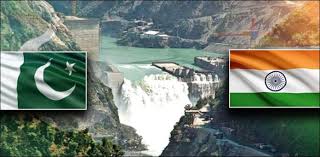
On August 31, 2026, the Permanent Court of Arbitration in The Hague ruled that the Indus Waters Treaty remains binding and that India cannot unilaterally suspend or terminate the agreement. The ruling also restricted certain construction activities connected to the Ratle hydropower project pending further proceedings. India rejected the tribunal’s authority and maintained its position regarding the treaty.
For Pakistan, the decision is diplomatically important, but it does not remove the underlying strategic problem. Pakistan depends heavily on the Indus River system for agriculture, food security and economic stability.
The lesson is that Pakistan must pursue two strategies simultaneously: defend its legal rights under the treaty while urgently improving water conservation, agricultural efficiency, storage capacity and domestic water management.
Pakistan cannot afford to treat water security solely as an India issue. It is equally an internal governance issue.
China and the Future of CPEC
China remains Pakistan’s most important long-term strategic partner.
But the second phase of the China-Pakistan Economic Corridor CPEC 2.0 must be judged differently from its first phase. The original emphasis was heavily focused on infrastructure, roads, energy and connectivity. The new agenda increasingly emphasizes industrialization, productivity, technology, human resources, innovation and employment.
This is potentially more important than the construction of another highway or power plant.
Pakistan’s central economic weakness is not simply a shortage of infrastructure. It is insufficient productivity, exports, investment and institutional efficiency.
If CPEC 2.0 succeeds in bringing manufacturing, technology transfer and export-oriented investment, it could materially strengthen Pakistan’s economy. If it remains primarily a collection of infrastructure and government-to-government projects, its transformative effect will be limited.
China also has its own interests. Beijing wants secure western routes, protection of its investments and greater regional connectivity. Pakistan must therefore ensure that its relationship with China produces economic value for both sides rather than simply increasing dependence.
Saudi Arabia, Türkiye and a New Strategic Triangle
One of the most significant developments of 2026 has been Pakistan’s expanding defense relationship with Saudi Arabia and Turkye.
The August 7 Mecca Joint Defence Agreement created a framework under which an attack against one member is treated as an attack against all. Subsequent plans have included greater military coordination, joint exercises and cooperation in defense industries and emerging technologies.
The agreement is strategically significant because it connects three countries with complementary capabilities: Saudi Arabia has financial and energy resources, Turkye possesses an increasingly sophisticated defense industry and NATO experience, while Pakistan brings a large military and nuclear deterrent.
However, it would be premature to describe the arrangement as a fully developed “Islamic NATO.”
Its institutional structure, operational commitments and political limits remain uncertain. Moreover, Saudi Arabia and Pakistan both have relationships with the United States, while Turkye remains a NATO member. The arrangement is therefore better understood as strategic hedging and collective deterrence than as the creation of a new anti-Western or anti-Iranian bloc.
For Pakistan, the opportunity is considerable. Defense cooperation could eventually expand into technology, manufacturing, drones, cybersecurity, aviation and other high value industries.
Pakistan and Iran
Pakistan must also carefully manage its relationship with Iran.
Islamabad cannot afford an openly hostile relationship with Tehran. Pakistan shares a long border with Iran, has important economic and cultural connections with its western neighbor, and must manage security concerns in Balochistan.
At the same time, Pakistan’s deepening defense relationship with Saudi Arabia and Türkiye could create new strategic complications.
The sensible Pakistani policy is therefore one of strategic balancing rather than bloc politics.
Pakistan should cooperate with Saudi Arabia without becoming an instrument of Saudi-Iranian rivalry. It should maintain relations with Iran without undermining its Gulf partnerships.
This balancing strategy is increasingly important as the Middle East becomes more militarized and geopolitical competition expands.
The United States: From Dependence to Transactional Partnership
Pakistan’s relationship with Washington is also changing.
The old Cold War model of a broad strategic alliance no longer exists. Nor is Pakistan likely to abandon its relationship with China in favor of the United States.
The emerging relationship is more transactional.
Washington remains important to Pakistan because of trade, investment, financial institutions, counterterrorism cooperation and diplomatic influence. Pakistan, meanwhile, has demonstrated that it can provide diplomatic value by maintaining communication channels with countries that Washington finds difficult to engage.
Pakistan’s greatest opportunity is therefore not to choose between Washington and Beijing. It is to convince both that a stable, economically successful Pakistan serves their interests.
The Economy: Stabilized but Still Fragile
Pakistan’s economic position remains the greatest constraint on its geopolitical ambitions.
The IMF projects real GDP growth of approximately 3.6 percent for 2026, with consumer-price inflation around 7.2 percent.These figures represent stabilization compared with periods of acute economic crisis, but they are not sufficient to transform living standards rapidly in a country of Pakistan’s size and demographic pressures.
Pakistan needs sustained growth above 5 percent for a prolonged period, combined with rising productivity and exports.
The fundamental problems are well known: a narrow tax base, low savings, weak export performance, energy sector inefficiencies, high public debt, policy uncertainty and insufficient private investment.
Repeated IMF programs can stabilize the balance of payments, but they cannot substitute for structural reform.
The real test of Pakistan’s economic policy is therefore not whether it can secure another loan. It is whether it can eventually stop needing emergency financial assistance.
Three Possible Pakistans by 2030
Pakistan’s future can reasonably be understood through three scenarios.
The first is Managed Pakistan. This is the most likely scenario. The military remains the dominant strategic institution, civilian governments continue operating within limits, PTI remains politically relevant, terrorism persists at manageable but serious levels, and the economy grows moderately without achieving a structural breakthrough.
The second is Strategic Pakistan. This is the optimistic scenario. A political accommodation reduces domestic polarization, terrorism declines, CPEC 2.0 attracts productive investment, Gulf capital increases, exports expand and Pakistan achieves sustained growth above 5 percent. Under this scenario, Pakistan emerges as a stronger middle power.
The third is Crisis Pakistan. Political confrontation intensifies, terrorism expands, relations with Afghanistan deteriorate, India,Pakistan tensions rise and economic reform stalls. Multiple simultaneous crises could overwhelm the government’s ability to manage them.
The probability of the third scenario is lower than many pessimists suggest but it should not be dismissed.
Conclusion: Geopolitical Importance Is Not Enough
Pakistan’s greatest asset is its geography. Its greatest weakness is its institutional fragility.
The country sits at the intersection of South Asia, Central Asia, the Middle East and China. It possesses nuclear weapons, a large military, a population of more than 240 million people, an important coastline and relationships with almost every major power in the wider region.
But geography creates opportunity; institutions determine whether that opportunity becomes national power.
Pakistan’s most probable future through 2030 is therefore neither collapse nor great-power transformation. It is a militarily strong, politically managed and economically stabilized but institutionally fragile middle power.
The country’s strategic challenge is to convert security relationships into investment, infrastructure into productivity, population into human capital, and geopolitical relevance into economic strength.
Military power can provide deterrence. Foreign alliances can provide strategic space. IMF programs can provide temporary stability.
But only political legitimacy, institutional reform, economic productivity and sustained investment can create durable national power.
For Pakistan, that is ultimately the real geopolitical test of the next decade.