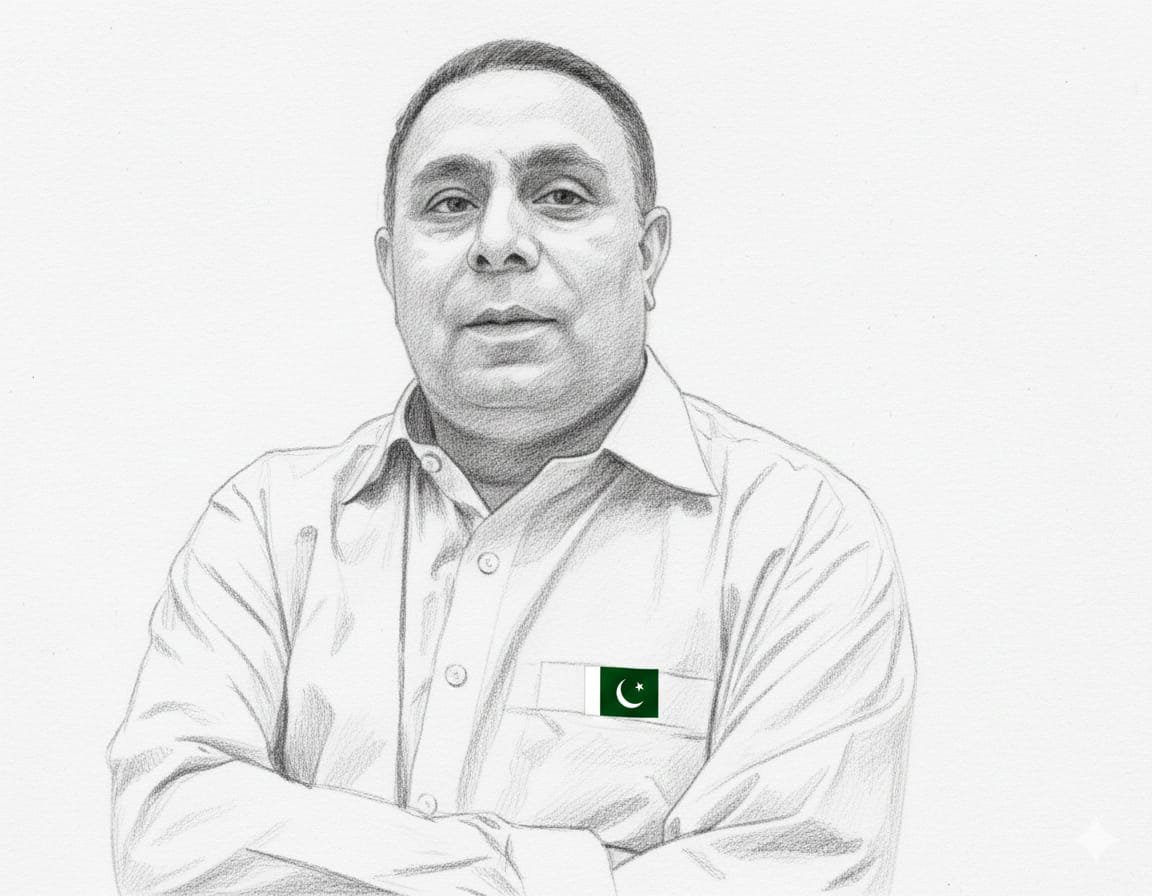
By: Tajammal Hussain Hashmi
Many years ago, a gathering of columnist brothers was held at the Karachi Press Club, and I was also invited. When it was my turn for introduction, the host friend said, “Hashmi Bhai has very close relations with the establishment people.” Everyone turned towards me as if something unusual had been said. I remained silent because it was not appropriate to argue in such a forum. However, I did say: “We owe a debt to the martyrs of this country. Believe me, our mothers are incredibly brave those whose young sons were martyred in front of them.”
If you have seen Karachi’s conditions after 1988, you would know how many young men, old people, and laborers became victims of linguistic violence. Whether Mohajir, Punjabi, Pathan, or Sindhi — the pain of every mother is the same, regardless of the language she speaks. The situation in Balochistan is also in front of everyone. There, mothers wander for days for the safety of their children. Even ordinary citizens killed by terrorists should be called martyrs, and their families should also be given government benefits.
We are suffering from a lack of collective empathy. Discrimination has mentally weakened us. Today we are burning in mutual hatred. I am surprised that schools used to teach love and brotherhood, and madrasas taught the religion of Islam. Today, teachers are making innocent children victims of their negative politics. How can such a society progress when teachers themselves become prey to hatred and division?
Today I was reading the story of former Malakand Commissioner Muhammad Javed’s duplicity and his love for the Taliban, involving the security guards. Commander Captain Najm Riaz received orders to go for the Swat operation. Before leaving for the operation, he expressed his wish to meet his mother.
The handsome 6 feet 3 inches tall, 24-year-old commando came home. His mother said, “What kind of operation is this in which you are going to fight your Muslim brothers?” He replied, “Mother, you too have fallen for the propaganda of those people who consider the anti-state Taliban as their brothers. Mother, if they were our brothers, they would not have fought against our country. They would not have put Pakistan’s existence in danger.”
The mother hugged her son lovingly. The son touched his parents’ feet. He whispered in his mother’s ear, “Ammi, when I return home as a martyr, you must not cry.” He touched his parents’ feet again, hugged his sisters, sat in the vehicle, and left through the village’s unpaved road.
I want to tell you that even the road leading to this Captain’s village was unpaved. When he left the house, his mother went up to the rooftop. She knew her son would look back. He turned the vehicle, waved at his mother, and disappeared from her sight.
A few days later, during the operation, Captain Najm Riaz and three other commandos from Mandi Bahauddin were unfortunately surrounded by the Taliban. Captain Raja Najm Riaz, Captain Junaid Ayaz Khan, Naik Shahid Rasool, and Naik Naik Shakeel were held captive by the Taliban for 22 days. They were taken to a house where torture began. For a few days, the Taliban allowed them to contact their families.
Meanwhile, Commissioner Malakand Muhammad Javed who was considered the godfather of the Taliban was sent to the Taliban for the release of these commandos. In front of the commandos, Commissioner Javed told the Taliban, “Return their weapons and keep these four with you.” The four commandos understood that a game was being played with them.
After Commissioner Javed left, eight Taliban entered the room, ready to behead them. They wanted to make a video and upload it on the internet. The commandos killed all eight in one swift strike. But unfortunately, the Taliban standing outside with weapons opened fire as soon as they heard the noise. They martyred the commandos with direct firing and then beheaded their bodies and dumped them.
A retired Havaldar and father of one of the martyrs, Dr. Babar Awan, was told by an old father that for Commissioner Malakand Javed, those four commandos were less important than four old rifles made of iron. Dr. Babar Awan had no answer to this.
Dr. Babar Awan asked what the government could do personally for them. The father of martyr Captain Najm Riaz said, “We don’t want anything for ourselves. Build a cadet college, a hospital, and a proper road in Kohat the one on which you take two hours to reach.” Dr. Babar Awan asked again if there was any personal issue or if they needed any help. The mother of the martyr, with tears in her eyes, raised her head and said:
“What can be more valuable than a son? And I have sacrificed even that for my country.”
She continued: “He was my only son. If I had ten sons, I would have sacrificed them all for my homeland.”
After this, no government official could stay in the house. In the courtyard of the house lay the beheaded body of her son from a few days ago. Salute to the courage of this mother and the dignity of this father who did not ask for anything for themselves but demanded education, health, and facilities for their people.
At that time, Yousuf Raza Gilani was the Prime Minister. When senior columnist and journalist Rauf Klasra asked him about former Commissioner Muhammad Javed, the Prime Minister said that a high-level inquiry was underway. The government found Javed guilty in the inquiry.
The excerpt from Rauf Klasra’s book Aakhir Kyun is important here.
Today, the mothers of the nation are demanding a better future for their children, but public welfare is no longer a priority for our rulers. Their priorities are to amass wealth and keep the nation entangled in problems.
We should stop having negative perceptions about the security institutions. They are ours and we are theirs. They are also part of the same society. Electricity does not come regularly in the homes of these commandos either. They buy the same ration as the common man. Tax is also deducted from their salaries just like ordinary people.
Let’s give way to love instead of hatred. This suffocation will only divide us further. Believe me, Pakistan is our country and we are all its protectors. Day and night, these men guard the security of the country and our peace. Those who make decisions for personal interests, constitutional amendments, and facilities sit in the assemblies. They are the ones who have been ruling like monarchs for