The decisive Indo-Pakistan tension of May 2025 marked a new chapter in the history of the subcontinent. On one side stood Indian aggression, driven by baseless claims and a political agenda rooted in power, while on the other side was Pakistan’s unwavering defense, strategic military prowess, and the unity of its people. This confrontation transcended mere conflict, evolving into an ideological war.
India, following its traditional playbook, sought to divert attention from its internal political crises and electoral setbacks by blaming Pakistan and escalating border tensions. However, this time, the dynamics were different. Pakistan not only countered the aggression effectively but also presented its stance convincingly on the global stage. India’s claims of surgical strikes were exposed as mere propaganda, while Pakistan’s retaliatory measures resonated deeply, reaching the enemy’s frontlines. The Pakistan Air Force’s exceptional performance in neutralizing hostile air strikes has been etched as a golden chapter in history.
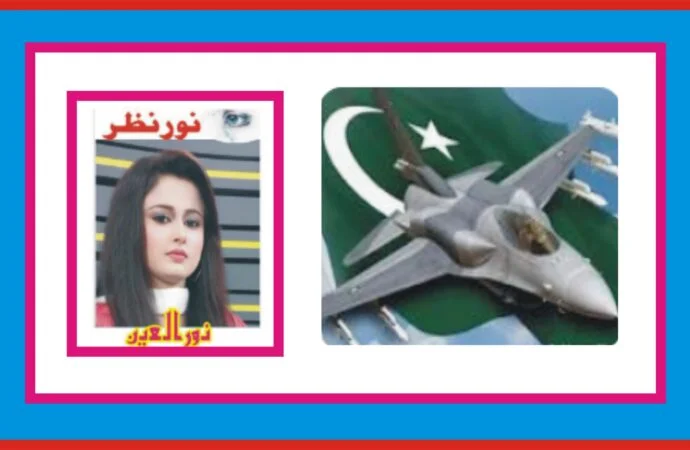
Most importantly, the nation stood united behind its defense forces, displaying a spirit of solidarity reminiscent of the 1965 and 1999 wars. India’s attacks on Pakistani civilians, residential areas, and mosques resulted in the martyrdom of dozens, including innocent children. In response, Pakistan targeted Indian military installations with precision. Under *Operation Bunyan Marsus (Iron Wall)*, the Pakistan Air Force’s JF-17 Thunder hypersonic missiles successfully destroyed India’s S-400 system in Adampur and neutralized key check posts along the Line of Control, including the Doba More Post in the Keller Sector, the Battalion Headquarters Suji, and the Jabbar and Tarkhian Complex in the Pir Kanthi Sector.
Pakistan’s decisive counterattacks had previously dismantled several Indian positions, such as the artillery gun position in Dehrangyari and the Brahmos storage site in Nagrota. These actions sent a clear message: any aggression would be met with an unyielding response. The downing of Indian aircraft during aerial engagements further debunked India’s claims of military superiority.
Diplomatic sources revealed that, under mounting pressure, the Indian government discreetly sought the intervention of U.S. President Donald Trump to broker a ceasefire. As the DG ISPR stated, *“Pakistan did not request a ceasefire; it was India’s desire.”* This plea underscored India’s desperation and vulnerability following Pakistan’s robust retaliation, forcing it into diplomatic retreat.
With the clouds of war dissipating, the time has come to reflect on the path ahead. Will both nations prioritize peace, development, and sovereignty? This conflict has not only secured Pakistan’s victory on the battlefield but also presented an opportunity to address internal challenges, stabilize the economy, and focus on education, health, research, and social justice. Missing this chance could lead to renewed hostilities.
The international community must recognize that lasting peace in South Asia hinges not on an arms race or power struggles but on justice, dialogue, and mutual respect. The silence of the United Nations and other global institutions on India’s unilateral aggression is deeply regrettable. Pakistan has demonstrated its commitment to peace while proving its capability to defend itself at all costs. The nation’s youth, scientists, soldiers, and leaders have collectively affirmed that Pakistan is a responsible nuclear power—one that seeks peace but is fully prepared to retaliate against any threat.
Pakistan’s military leadership has reaffirmed that the nation’s integrity is non-negotiable, a stance acknowledged by the international community. Now is the moment for Pakistan to forge new paths in development, research, and prosperity. The era of hostility must end; the time for reconstruction has arrived.
While this war concluded in Pakistan’s favor, true victory lies in becoming a strong, prosperous, educated, and self-reliant nation. Both Pakistan and India must now take earnest steps toward regional peace and stability. The human and economic toll of this conflict has made it evident that real triumph is achieved not on the battlefield but at the negotiating table.